About
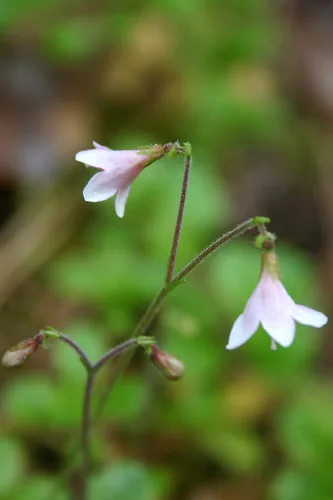
Twinflower (Linnaea borealis) is a delicate evergreen subshrub of cool conifer and mixed forests, famous for pairs of pale pink, bell-shaped blooms on thread-thin stems. Plants form low mats a few inches tall with paired roundish leaves; it is a poor match for hot, steamy lowland subtropical and tropical Americas but belongs in the library for temperate travelers and mountain microclimates. Dappled shade to bright shade; avoid blasting tropical sun. Consistently moist, acidic, well-drained humus; think forest floor, not patio pots baking on concrete. High humidity alone will not substitute for cool nights—expect decline if summer nights stay oven-like. Softwood cuttings in early summer under mist; roots slowly, so patience is a feature. Layer low stems where they touch moist soil; sever once rooted the following season. Seed is tiny and erratic; cold stratify and surface-sow—more a nursery project than a bulk hedge. Primarily ornamental and ecological; some Indigenous traditions reference Linnaea medicinally—do not harvest wild populations; research ethics and legality first. Best “use” is leaving plants to feed native pollinators in appropriate climates.
Permaculture Functions
- Ground Cover: Linnaea borealis evergreen mats stay inches tall under spruce-fir canopies -- rhizomes spread slowly in cool, acidic duff, not in hot humid lowlands.
- Wildlife Attractor: Paired pink bells offer nectar to small bees and syrphids in boreal summer -- timing aligns with short growing seasons where big flashy flowers are absent.
- Ornamental: Thread-thin stems and mirror-image blooms punch above their height on mossy edges -- instant fairy-garden credibility where summers stay mild.
- Medicinal: Some Salish and northern herbal references cite Linnaea -- scarcity and tiny biomass mean ethical wild harvest is effectively off the table; leave plants for pollinators unless you propagate ethically.
Companion Planting
Threats & Pressure