About
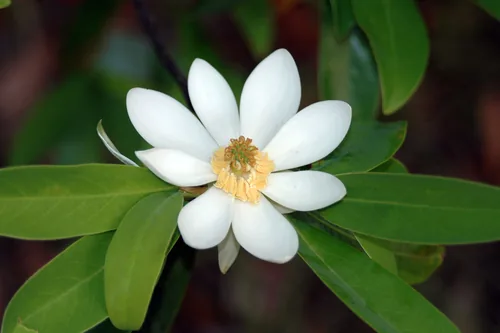
Sweetbay magnolia (Magnolia virginiana) is an evergreen to semi-evergreen tree of acidic swamps, bay forests, and moist woodlands along the Atlantic and Gulf coastal plains and northward in sheltered microclimates. Lemon-scented creamy flowers open in late spring and sporadically in warm weather; red cone-like fruits show silver seeds. It supplies high-canopy shade in humid subtropical food forests without the heavy darkness of dense broadleaf evergreens. Full sun to part shade; afternoon shade reduces leaf burn where winters are mild and summers long. Prefers consistently moist, acidic, organic soils; tolerates brief flooding typical of swamps. Not for high pH desert soils without major amendment and ongoing acidification. Sow fresh seed after removing red coating; do not let seed dry completely. Semi-hardwood cuttings in summer under mist can work for clones. Transplant young trees in cool, wet weather; mulch wide to protect surface roots. Flowers are occasionally used for teas or flavoring in tiny amounts with confident ID; focus landscape harvest on aesthetic pruning after bloom if shaping is needed. Collect fallen leaves for acidic mulch under blueberries; avoid heavy summer pruning that stresses heat-stressed trees.
Permaculture Functions
- Ornamental: Magnolia virginiana lemon-cream cups glow against pale undersides -- on multi-trunk specimens framing pond decks.
- Wildlife Attractor: Beetles pollinate primitive flowers -- while bright red cone seeds feed wood ducks and rodents along blackwater swamps.
- Shade Provider: Open vase silhouette filters Gulf Coast sun for native azaleas -- without the permanent gloom of overhead oak canopy.
- Mulcher: Thin acidic leaves compost fast into blueberry guilds -- when you leave litter under the drip line instead of bagging it.
- Erosion Control: Buttressed roots hug anaerobic muck on pond shelves -- biofiltration cells stay planted through hurricane surge cycles as a result.
Companion Planting
- Chlorosis on alkaline soils — choose tolerant sites or accept ongoing sulfur/organic acid management
- Magnolia scale outbreaks — monitor trunks and major limbs; promote beneficial insects with diverse understory