About
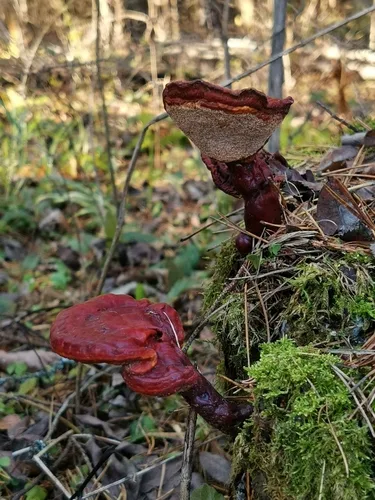
Eastern reishi is a lacquered bracket fungus on hardwoods and root crowns — glossy, kidney-shaped, woody, with a distinctive red-to-orange varnished cap. Taxonomy is genuinely messy: the Ganoderma lucidum sold in Asian commerce is likely a different species than what grows on American oaks and maples; G. sessile is the common eastern U.S. lacquered bracket. In subtropical Florida they appear on stressed oaks, sweetgums, and other hardwoods — the tree is usually signaling root rot or internal decay when a bracket shows up. Outdoor log cultivation in shade with buried or stump-inoculated blocks is viable but slow. Sawdust blocks indoors produce antler-form fruiting bodies in high-CO₂ conditions, classic caps in fresh air — both are usable. Natural fruiting on trunks and stumps in partial shade. Outdoor cultivation uses buried hardwood logs or stumps; long timelines (6-18 months before first flush). Humidity helps conk formation; dry Florida summers require irrigation pulses on outdoor substrate. Sawdust blocks or supplemented hardwood substrate for indoor production. Outdoor burial of colonized logs or stump inoculation for landscape integration. Research strain-to-host match; not all Ganoderma strains perform equally on all substrates. Harvest mature brackets when still flexible -- chalky dry conks are past prime for tea quality. Slice ribbons and air-dry with fan flow; finish crisp before jar sealing. Long low simmers extract polysaccharide body; label batches with wood host and date.
Permaculture Functions
- Medicinal: Ganoderma sessile lacquered brackets yield triterpenoids and beta-glucans in long low simmers like East Asian lingzhi practice -- Asian commerce often stamps lucidum on unrelated taxa; voucher your local varnish shelf against stem host and pore anatomy before marketing doses to yourself.
- Biomass: Each harvest removes pounds of woody conk tissue while leaving basal mycelium to reflush -- air-dry ribbons to crisp before jarring because residual moisture grows mold faster than marketing claims grow.
Companion Planting
No companion data yet.
Also mentioned as companions:
- Oak
- Maple
- Sweetgum
Not yet profiled in PermiePortal
- Ganoderma on a live landscape oak usually means root or trunk decay — consult an arborist before the tree becomes a liability
- Do not harvest grandmother's oak for tea clout