About
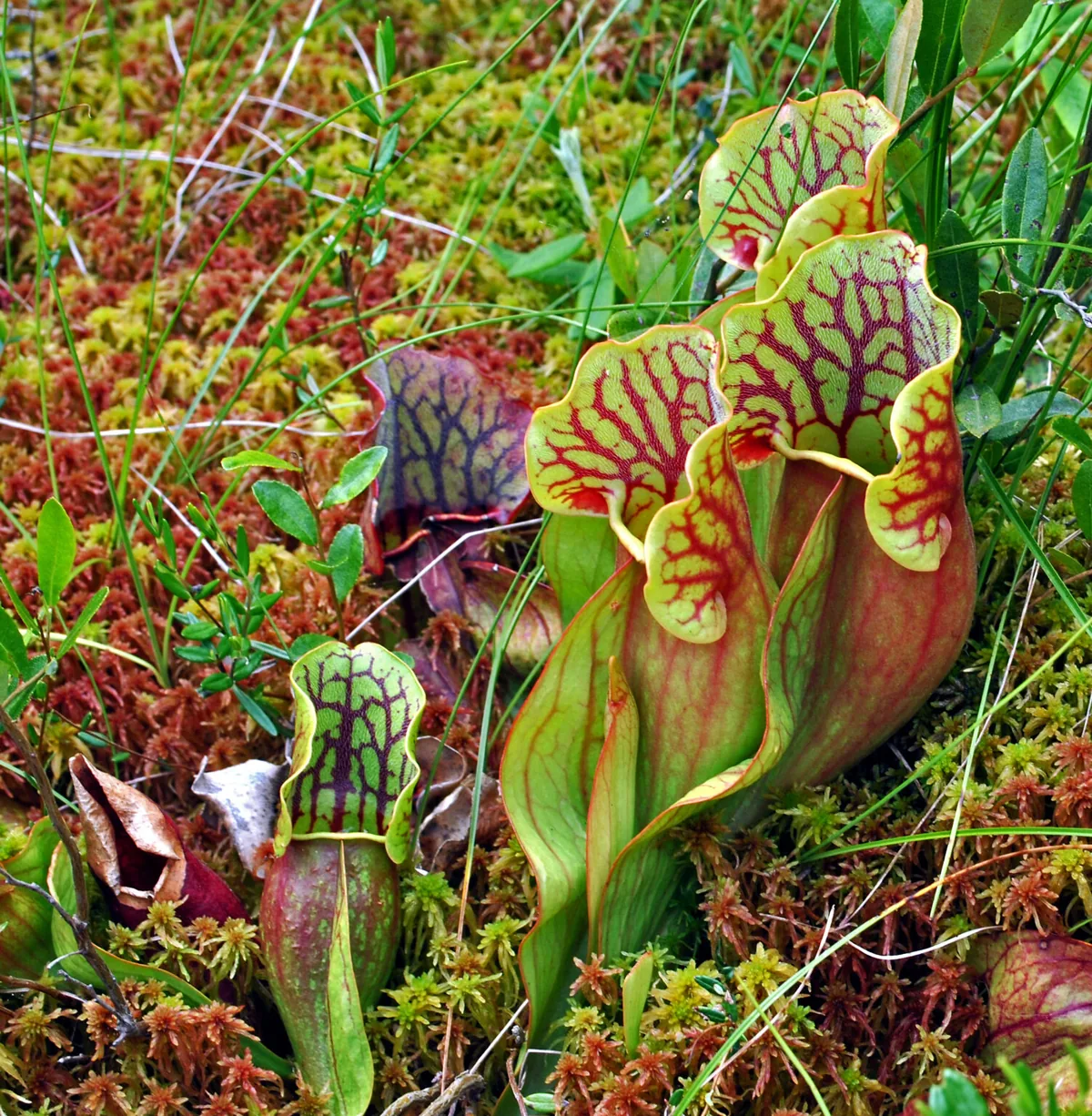
The Pitcher Plant is a carnivorous perennial native to North America, particularly the southeastern coastal plains. It features tubular, pitcher-shaped leaves that trap and digest insects, providing nutrients in nutrient-poor soils. The plant produces unique, nodding flowers in spring. It thrives in sunny, open wetlands with acidic, nutrient-poor soils. Propagation is typically through seed or division, and it requires consistently moist conditions. Seed: Sow fresh seeds on moist sphagnum moss and maintain high humidity. Division: Divide established clumps during dormancy. Sun: Full sun with at least six hours of direct sunlight daily. Water: Keep soil consistently moist using distilled, rain, or reverse osmosis water. Harvesting is not typical due to its carnivorous nature and ecological importance.
Permaculture Functions
- Pest Management: Sarracenia spp. tubular leaves collect rainwater laced with narcotic nectar and downward-pointing hairs, drowning flies and ants whose nitrogen replaces missing peat nutrients -- not a housefly solution for whole barns, but real biocontrol on bog-table scale.
- Wildlife Attractor: Pitchers host specialist mosquito and midge larvae in mutual soup food webs while flowers lure bees on separate timing to avoid killing their own pollinators -- leave wild clones alone on protected sites.
- Ground Cover: Rosettes of purple-veined tubes carpet sunny savanna bogs after winter burn, shading sphagnum and live sphagnum substitutes in garden liners -- pair with thread-leaf sundew for authentic southeast coastal plain guilds.
Companion Planting
- None specified
Threats & Pressure