About
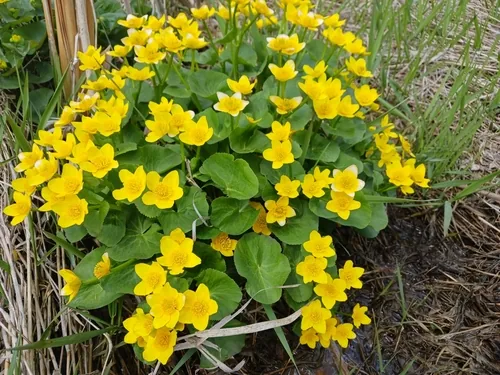
Marsh marigold (Caltha palustris) is a glossy-leaved, buttercup-family perennial of cold seeps, pond margins, and slow streams. In spring it throws up hollow stems and bright yellow, shiny-petaled flowers above kidney-shaped leaves; clumps typically stay under about 18 inches tall but can spread into broad colonies where soil stays wet. It is a temperate icon of spring wetlands, not a tropical workhorse. subtropical and tropical Americas: Treat it as a niche or seasonal experiment in shaded, constantly moist microsites at elevation or in the coolest pockets you can engineer—humid heat and dry-down periods are what send it to the compost confessional. Part sun to light shade in hot climates; cooler regions tolerate more sun if roots never dry. True bog moisture: roots in muck or shallow water; no “well-drained” fantasy—this plant wants the squelch. Division in late winter or immediately after flowering while soil is wet; reset divisions at the water’s edge. Seed: sow fresh seed on wet peat/muck; many populations need cold-moist stratification—start in trays outdoors through winter in suitable climates. All parts are toxic raw; do not forage like salad unless you enjoy ER fanfiction. Enjoy as an early pollinator pulse and wetland stabilizer; cut back spent stems after seed drop if you manage aesthetics around a pond edge.
Permaculture Functions
- Ornamental: Caltha palustris holds shiny yellow buttercup cups above glossy kidney leaves -- reads like highlighter paint along cold pond margins where turf would drown.
- Wildlife Attractor: Early-season pollen and nectar feed halictid bees and syrphid flies while snowmelt still chills air -- critical bridge food before prairie forbs wake up.
- Pollinator: Flowers face upward for easy landing boards in breezy wetland sun -- mass clumps so early pollinators cruise a corridor instead of isolated stems.
- Water Retention: Fibrous roots knit saturated muck -- slowing erosion when ice heaves and spring floods rearrange soft banks.
Companion Planting