About
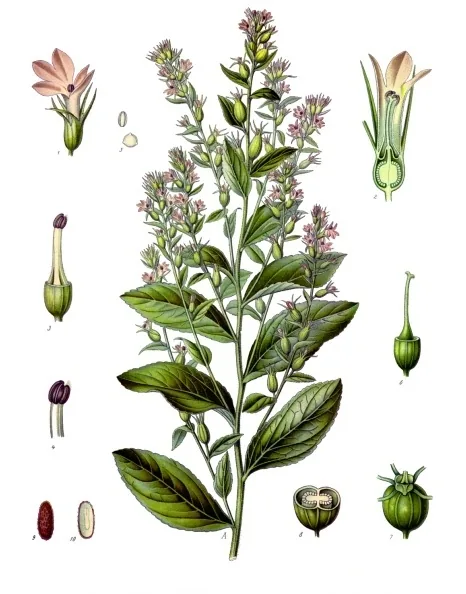
Lobelia inflata is a small North American annual to short-lived perennial herb famous for inflated seed capsules and a history in eclectic herbalism—and for alkaloids that punish casual experimentation. Upright stems carry alternate leaves and spikes of pale blue flowers, usually under 2 feet tall in disturbed soils and woodland openings. In subtropical and tropical Americas it appears as a cool-season or higher-elevation oddity; humid lowland summer heat often ends the show fast unless partial shade and steady moisture mimic its preferred edge habitat. Puerto Rico’s montane roadsides can host lobelias with similar ecology; treat this species as toxic until you have formal training, not a salad garnish. Part sun to light shade in hot climates; full sun only where summers stay mild. Moist, rich, well-drained soil high in organic matter; avoid drought baking. Even moisture during bloom and seed set; reduce rots with mulch, not splashing. Seeds: surface sow in cool conditions; tiny seeds need light and constant moisture. Transplant self-sown volunteers early before taproot complains. Not a reliable division crop—treat as a self-reseeding annual in managed beds. If harvesting for medicine, follow qualified protocols and legal frameworks; peak timing is cultivar and climate dependent. For seed collection, gather inflated capsules before they shatter if you are maintaining a controlled bed line.
Permaculture Functions
- Medicinal: Lobelia inflata seed pods swell like inflated bladders before releasing dust-fine seed -- eclectic herbalism used low doses of lobeline-rich plant matter as a respiratory stimulant, but toxicity is narrow; trained practitioners only.
- Pollinator: Pale blue tubular corollas offer nectar to small bees along woodland edges -- site in part sun with steady moisture so capsules set before midsummer drought collapses stems.
- Wildlife Attractor: Finches and sparrows strip mature capsules if you leave stands uncut -- good for seed-eaters, less good if you need clean bed lines next spring.
- Border Plant: Slim spires edge vegetable beds as a self-seeding annual marker -- rotate beds because lobelia likes disturbed soil and disappears when mulch gets too thick and tidy.
Companion Planting
- Tobacco
- Tomato