About
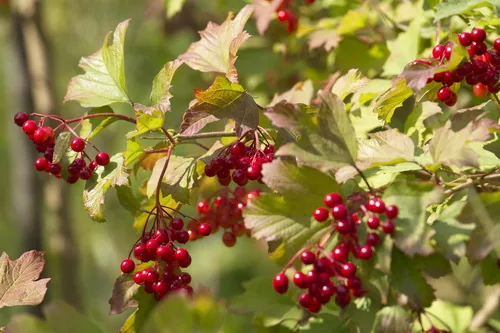
Highbush cranberry (Viburnum opulus var. americanum), often still called Viburnum trilobum in older references, is a deciduous North American shrub of moist woods, lake edges, and cool temperate climates, bearing maple-like leaves, flat white flower clusters, and bright red sour fruit. Height commonly reaches 8–12 feet (2.4–3.6 m). It is a classic edible hedge for cold regions where true cranberries need peat and you prefer upright fruit at picking height. Full sun to light shade; more sun improves flowering and fruit if soil moisture holds. Rich, moist, well-drained soils mirror natural sites; tolerates seasonal wet feet better than desert shrubs. Mulch roots to buffer summer heat on marginally cool sites. Sow seed after warm-cold stratification; germination is slow. Softwood cuttings under mist can clone known selections. Prune after fruiting to open interior for light—dense twig mats invite viburnum beetles to party. Pick berries after full color for sauces and jellies—flavor is tart, not candy. Leave some fruit for birds if diplomacy matters. Flowers are showy in late spring—avoid spraying during pollinator activity.
Permaculture Functions
- Edible: Viburnum opulus var. americanum drupes cook into tart sauces and jellies like true cranberries -- harvest after full scarlet color and expect a peculiar aroma in the pot that finishes fine in the jar.
- Wildlife Attractor: Flat cymes of white flowers feed early pollinators while persistent red berries feed overwintering birds -- leave upper clusters if diplomacy with wildlife matters more than a clean hedge face.
- Ornamental: Maple-like three-lobed leaves, showy May blooms, and hanging red fruit give cold-climate structure -- works in mixed borders where moist soil and air circulation keep viburnum beetles from skeletonizing every leaf.
- Border Plant: Upright multistem habit fills fencerows and lake-edge windbreak understories -- plant two unrelated clones if your selection needs cross-pollination for heavy fruit set.
Companion Planting
- Viburnum Leaf Beetle — skeletonized leaves signal inspection time, not denial
- Hot dry summers — marginal without irrigation; not a Mojave volunteer
Threats & Pressure