About
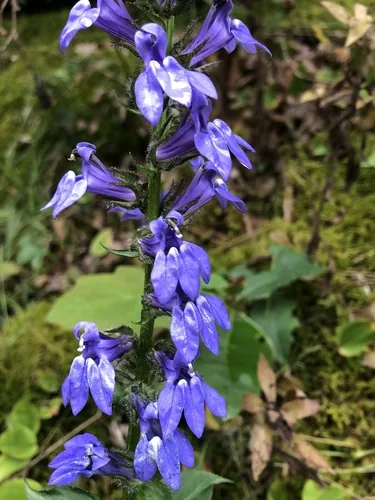
Great blue lobelia (Lobelia siphilitica) is a moisture-loving perennial of streambanks, seeps, and rain garden bottoms in eastern and central North America, producing upright spikes of intense blue tubular flowers in late summer. Height is commonly 2–3 feet (0.6–1 m) with lance-shaped leaves. It pairs with cardinal flower for red-blue drama and belongs anywhere sun hits wet soil without apology. Full sun to light shade; afternoon shade reduces stress where heat and humidity stack. Consistently moist, organic soils are ideal; tolerates brief inundation in swales. Do not maroon it on a dry berm and expect loyalty. Sow seed on moist surface; tiny seedlings need gentle handling. Divide clumps in early spring before rapid growth. Self-sows where happy—edit volunteers early if design is strict. Leave flowers for hummingbirds and bees; cut a few stems for short-lived bouquets if guilt permits. Seed capsules scatter fine seed—collect intentionally for sharing. Cut back frost-killed stems in late winter to tidy without harming crowns.
Permaculture Functions
- Pollinator: Lobelia siphilitica opens intense blue tubular corollas in late summer when many meadow plants are done -- long-tongued bees and migrating hummingbirds work the spikes along soggy margins.
- Wildlife Attractor: Upright stems and small seed capsules feed finches and insect larvae in wet ecotones -- leave frost-killed stalks until late winter so birds can strip seeds before you cut for tidy spring.
- Ornamental: Saturated cobalt spikes read clean against dark lance leaves -- use it as vertical punctuation in rain gardens where color needs zero apology.
- Water Retention: Roots thrive in rain-garden bottoms and bioswales that detain sheet flow -- the plant is the living indicator that water is actually hanging around long enough to recharge soil instead of racing off-site.
Companion Planting
- Toxic if eaten in quantity — contains lobeline-related chemistry; not a salad ingredient
- Drought — foliage collapses quickly without soil moisture; wrong plant for xeric virtue signaling