About
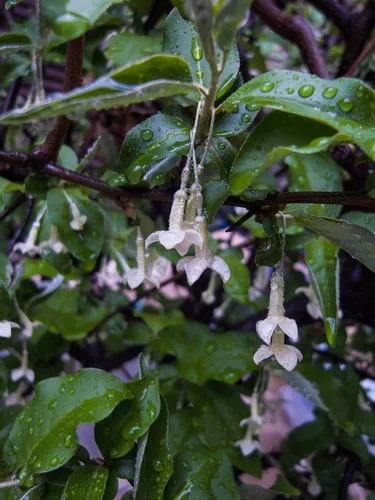
Goumi (Elaeagnus multiflora) is a deciduous to semi-evergreen shrub from East Asia, widely planted for silvery-scaled leaves, fragrant spring flowers, and tart scarlet berries speckled with silver. Plants typically reach 6–10 feet (1.8–3 m) and tolerate lean soils thanks to actinorhizal nitrogen fixation on roots. It suits temperate to warm-summer food hedges, windbreak understories, and poultry margins where thorns are acceptable trade for fruit. Full sun for heaviest fruiting; light shade reduces yield but aids establishment in hot dry sites. Well-drained soils; tolerates drought after establishment due to salt-tolerant family physiology. Avoid waterlogged clay that rots roots while you blame the cultivar. Sow cleaned seed after stratification if available; vegetative propagation is more predictable for selected types. Softwood cuttings under mist root in warm weather. Prune after fruiting to open the interior for light and air. Berries soften and sweeten somewhat after astringent early stages—taste before bulk processing. Use for jelly, sauces, or drying when fully colored. Flowers are powerfully scented—plant downwind of bedroom windows if you are scent-sensitive.
Permaculture Functions
- Edible: Elaeagnus multiflora yields tart scarlet berries freckled with silver that soften after the first astringent bite -- cook into jelly and sauces once fully colored, tasting each batch because astringency varies with ripeness and cultivar.
- Nitrogen Fixer: Actinorhizal Frankia nodules on roots fix atmospheric nitrogen -- leaf fall and fine root turnover bank that fertility into the topsoil for neighboring apple, comfrey, or grass understory without synthetic N passes.
- Wildlife Attractor: Heavily scented spring flowers pull bees into the hedge row, and ripe fruit feeds songbirds in minutes -- net canopies or harvest early if you want human share instead of feathered redistribution.
- Border Plant: Dense, sometimes thorny twigs knit into a living fence that marks property lines and slows casual foot traffic -- prune after fruiting to keep interior wood lit and air moving so silver-scaled foliage stays productive.
Companion Planting
- Potentially invasive in some regions — check local assessments before planting near natural areas
- Thorns — present on many selections; wear gloves for pruning theater
Threats & Pressure