About
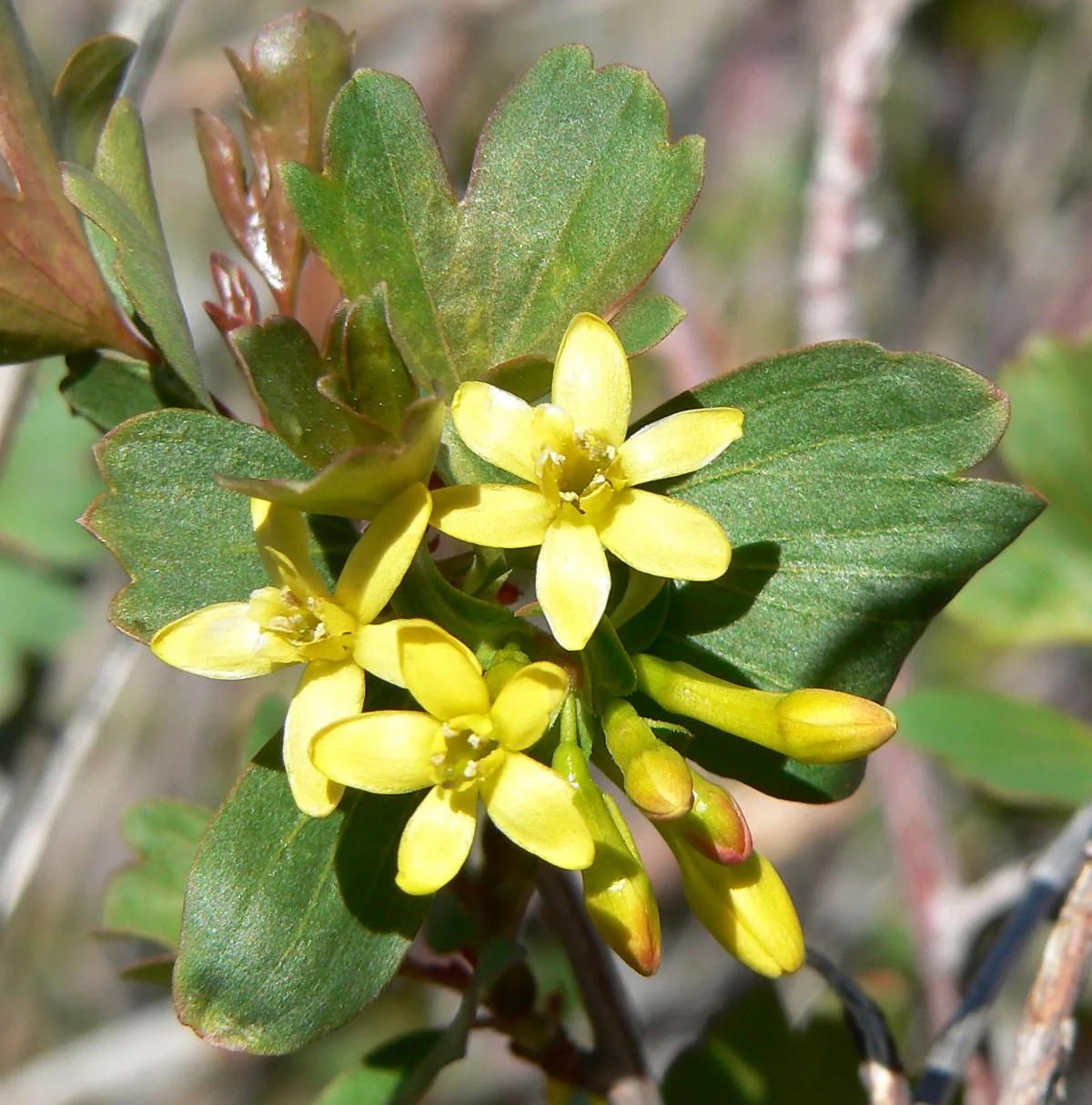
Golden currant (Ribes aureum) is a deciduous ribes shrub of riparian thickets, rocky slopes, and prairie edges across much of North America, famous for clove-scented yellow spring flowers and tart golden to black berries on spine-free stems. It is a food forest understory fruit for cold and continental climates where citrus is greenhouse gossip. White pine blister rust regulations still matter in some jurisdictions—check local rules before planting near five-needle pines in restricted areas. Full sun to partial shade; best fruiting with strong light and even soil moisture through bloom and berry swell. Tolerates drought once established but berries shrink without water. Prefers well-drained, fertile soils; tolerates alkaline sites better than many Ribes. Winter-hardy deep into cold zones; late spring frosts can damage flowers—site with air drainage on frost pockets. Hardwood cuttings in late winter root with bottom heat. Seeds require cold-moist stratification; germination stretches across weeks. Pick berries when fully colored, soft, and aromatic; use fresh, in jams, or fermented. Prune old wood after harvest to renew fruiting wood and open the center for air.
Permaculture Functions
- Edible: Ribes aureum berries ripen tart to sweet as they darken -- eat out of hand, cook into jam, or ferment; clove-scented flowers are edible in small amounts as garnish when you want perfume without sugar.
- Wildlife Attractor: Dark berries feed songbirds late in the season while thicket cover gives cover near ground -- site away from dog runs if you want undisturbed tortoise and bird use on adjacent land.
- Pollinator: Pale yellow, intensely fragrant spring clusters offer nectar and pollen to early bees when nights are still cool -- a reliable insect draw on ribes hedges before summer composites peak.
- Border Plant: Spine-free, arching stems knit into edible hedgerows and path edges -- fragrant bloom reads as a seasonal landmark without the blood tax of gooseberry spines.
Companion Planting
- White Pine Blister Rust — Ribes can be alternate hosts; follow regional restrictions near commercial five-needle pine production
Threats & Pressure