About
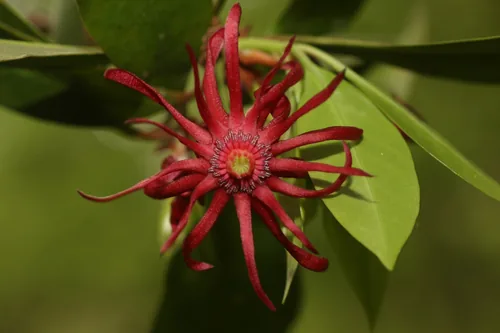
Florida anise (Illicium floridanum) is an evergreen shrub of moist ravines, bluffs, and streambanks around the Gulf and Atlantic coastal plains, with aromatic, redolent leaves and bizarre maroon star-flowers that look like props from a noir film. It is not culinary star anise—fruits and plant parts are toxic if treated like spice-rack inventory. In landscapes it delivers deep shade texture, year-round structure, and flowers that intrigue pollinators adapted to oddball blooms. Permaculture value is mostly habitat, edge screening, and honest warnings about foraging illiteracy. Partial to full shade in hot climates; morning sun with afternoon shade works on moist sites. Requires steady soil moisture and organic, acidic soils; wilts dramatically in drought or root heat from black plastic mulch crimes. Sheltered sites reduce winter desiccation in the cooler end of its range. Semi-hardwood cuttings root under mist with warmth and humidity. Seeds germinate slowly; keep moist and shady for year-one seedlings. Do not harvest for food. For ornamental use, prune after bloom to shape; avoid heavy shearing that exposes inner twigs to sunburn.
Permaculture Functions
- Ornamental: Illicium floridanum maroon strap-petalled star blooms perfume moist ravine borders with licorice-sharp scent neighbors nickname stinkbush -- evergreen leaves hold winter structure on zone 7-10 shade toes without kitchen anise safety.
- Wildlife Attractor: Early spring oddball flowers draw flies and beetles before canopy understory closes on acid hammock soils along Gulf drainages -- where sweetbay magnolia already proves moist chemistry works.
- Border Plant: Compact rounded shrubs ten to fifteen feet block sight lines on shady swale toes -- where irrigation soaker lines keep moisture even through April drought windows that crisp lesser shade shrubs.
- Shade Provider: Dense shade under limbs cools cinnamon fern carpets without juglone baggage -- that walnut guilds carry on the same north-face paths beside limestone seeps you mulched with coarse oak leaf.
Companion Planting
Also mentioned as companions:
- Oakleaf Hydrangea
Not yet profiled in PermiePortal
- Toxic look-alike risk for foragers—do not confuse with edible Illicium verum or assume "anise" means kitchen safe
Threats & Pressure