About
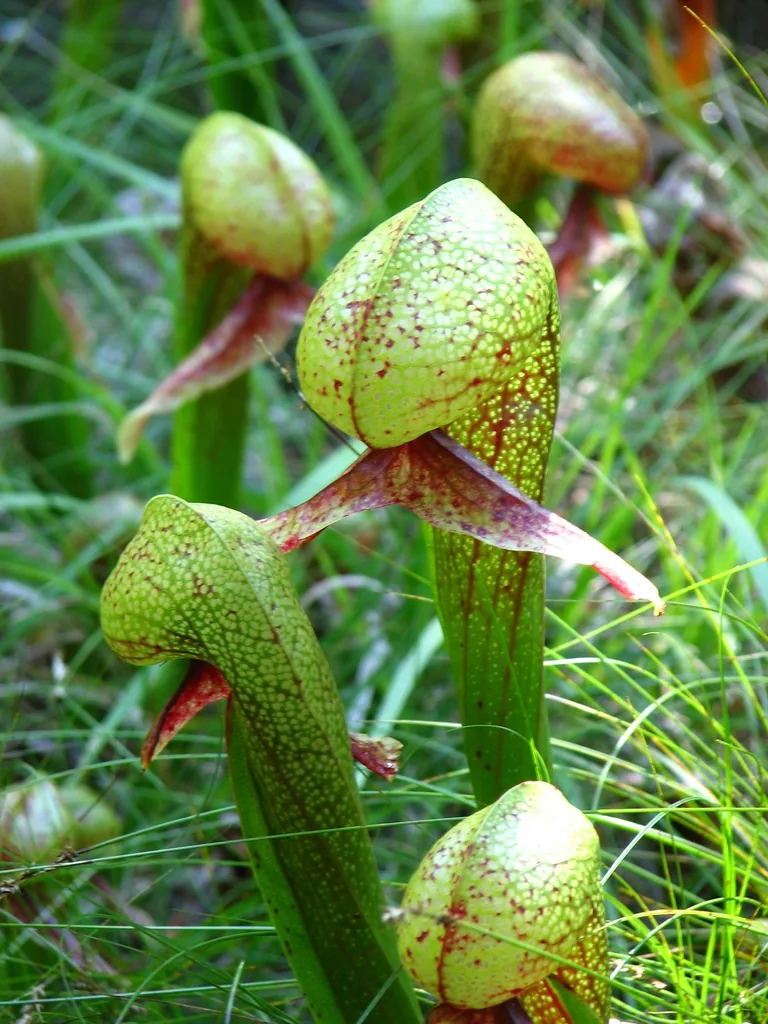
Darlingtonia californica, commonly known as the Cobra Lily, is a unique carnivorous plant native to Northern California and Oregon. Its tubular leaves resemble a rearing cobra, complete with a forked "tongue," which lures insects into its trap. The plant's pitchers can grow up to 1 meter (approximately 3.3 feet) tall under optimal conditions. Unlike other pitcher plants, the Cobra Lily regulates the water level in its pitchers by absorbing or releasing water through its roots. It thrives in nutrient-poor, acidic bogs and seeps with cold running water, often on serpentine soils. Prefers sunny conditions in humid, warm environments but can tolerate part-shade if humidity is low. Requires consistently moist, cool soils, often found near cold mountain streams or bogs. Best propagated through stolon division in late winter or early spring. Cut stolons into sections with roots attached and place on moist sphagnum moss in a humid environment with bright light. As a carnivorous plant primarily grown for ornamental purposes, there is no specific harvest period. Regular observation and maintenance are recommended to ensure plant health.
Permaculture Functions
- Pest Management: Translucent hoods and nectar trails lure flies into pitchers -- where they drown and feed the plant, not your vegetable aphid load, in specialized bog plantings.
- Wildlife Attractor: Pitcher fluid and decaying prey support midge larvae, mites, and a tight web of arthropods unique -- to Darlingtonia seeps.
- Ground Cover: Rosettes spread slowly in cold, oxygenated muck beside streams -- filling gaps between sedges where turf would drown.
Companion Planting
Also mentioned as companions:
- Sphagnum Moss
Not yet profiled in PermiePortal
- Plants requiring alkaline soils
Threats & Pressure