About
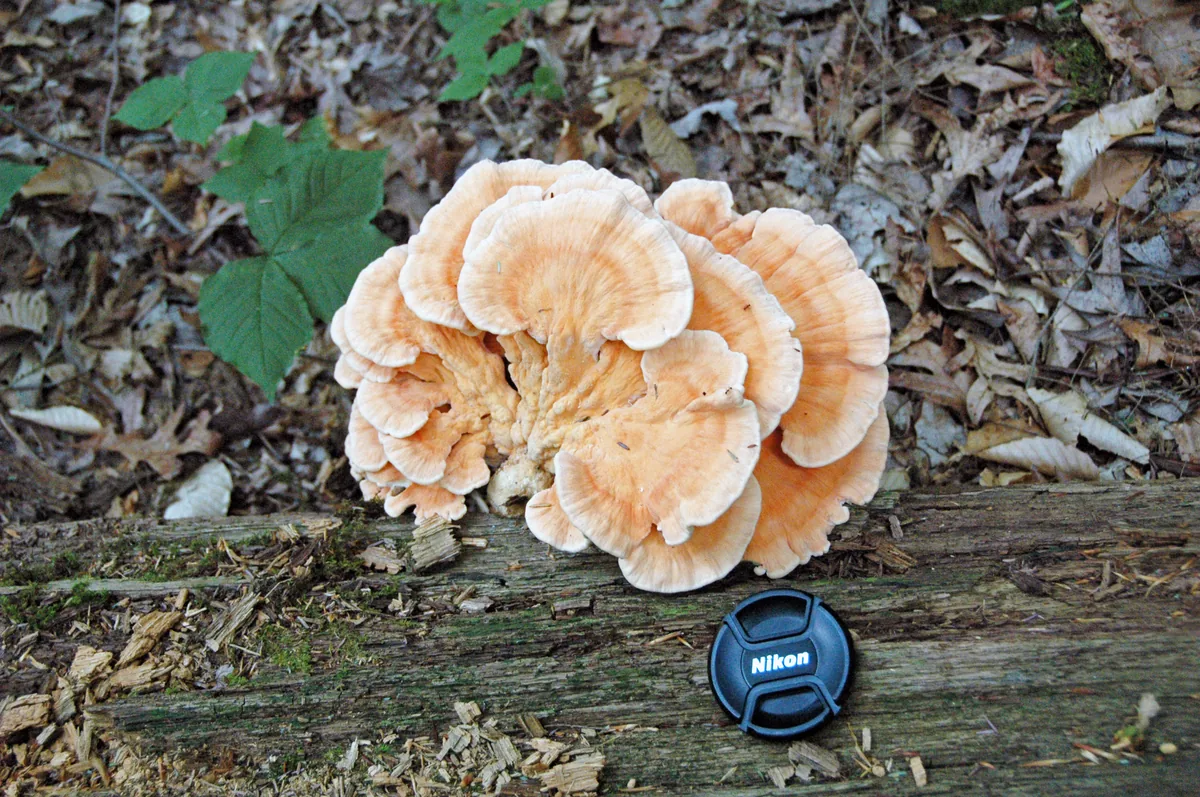
Chicken of the woods is the traffic-cone bracket — overlapping shelves in electric orange and sulfur yellow fruiting from trunks and large limbs of hardwoods and occasionally conifers. It is one of the most visually distinctive edible fungi in North America; a confident ID is achievable even for beginners when the specimen is fresh and the host is confirmed. Florida has its own Laetiporus complex species (L. gilbertsonii and others) on oaks and other hosts; taxonomy in this group is still being resolved, but the practical harvest rules are the same. The host tree is often already stressed or dying when brackets appear; brackets signal internal decay, not decoration of a healthy tree. Some people react poorly even to properly prepared specimens — the 'small taste first' rule is not optional here. Natural fruiting on trunks and large limbs in sun to partial shade. Rain cycles trigger growth; does not respond to micro-managed irrigation like a garden vegetable. Cannot be reliably cultivated outdoors; wild observation and ethical harvest is the primary relationship. Stump or log inoculation with plug spawn is experimental and inconsistent — this is primarily a wild-harvest species. Respect property rules and park regulations before harvesting from public lands. Harvest young overlapping shelves while still juicy -- old brackets toughen into shoe leather. Trim close to wood, transport in paper, cook thoroughly day-of. Never mix unknown brackets on the same skillet -- ID certainty first, brunch second.
Permaculture Functions
- Edible: Young orange-yellow brackets with soft pores cook to a chicken-like texture -- demand certain hardwood hosts, thorough cooking, and a cautious first taste because reactions vary.
- Mulcher: White-rot mycelium breaks lignin in standing snags and downed logs, speeding collapse of hazard trees you already flagged -- for removal.
- Wildlife Attractor: Aging shelves become beetle hotels and insect buffets -- draw woodpeckers and other insectivores to the same trunk.
Companion Planting
No companion data yet.
Also mentioned as companions:
- Oak
- Cherry
- Willow
Not yet profiled in PermiePortal
- Avoid specimens on conifers, eucalyptus, or black locust — associated with GI reactions in a meaningful subset of foragers
- Always cook thoroughly; raw consumption causes reactions even in tolerant individuals
- First taste test applies even if you have eaten it before — individual responses vary by specimen, host, and preparation
Threats & Pressure