About
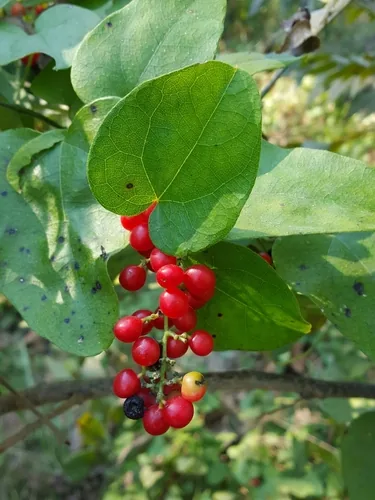
Carolina snailseed (Cocculus carolinus) is a deciduous twining vine of southeastern North American thickets and woodland edges, with bright green leaves and showy clusters of glossy red berries (on female plants) that persist into winter on some sites. Stems climb by twining to roughly 10–20 feet (3–6 m) on supports, forming airy screens on fences, trellises, and scrub. Birds distribute seed; humans should treat berries as ornamental-wildlife food, not trail snacks, without expert knowledge. Full sun to partial shade; berries color best with good light. Average to moist, well-drained soil; tolerates heat and humidity typical of humid subtropical summers. Mulch roots; avoid drought on sandy berms without irrigation. Sow cleaned seed after cold stratification; germination may be slow. Semi-hardwood cuttings in summer with hormone. Layer stems to ground in moist mulch; detach rooted sections next year. Enjoy red bead display in fall and early winter; prune after fruiting if you need to control height on trellises. Remove volunteers at the root if spread exceeds design intent.
Permaculture Functions
- Wildlife Attractor: glossy red bead clusters on female vines feed winter birds -- while twining stems give cover for small snakes and nesting songbirds along fence lines.
- Ornamental: airy green leaves set off pendant coral-bead fruit that hangs into winter for holiday color in humid southeastern thickets -- when both sexes are present.
- Ground Cover: low twining stems skirt shrub bases and crawl mulch if given string or shrub armature -- filling visual gaps without smothering crowns when pruned after fruit.
- Erosion Control: roots stabilize disturbed woodland banks once the vine climbs trellis or living supports -- that keep fruiting wood off bare sliding soil.
Companion Planting
- Spread by birds — expect volunteers near fruiting females in mild climates
- Male and female plants — need both for showy berries on females
Threats & Pressure