About
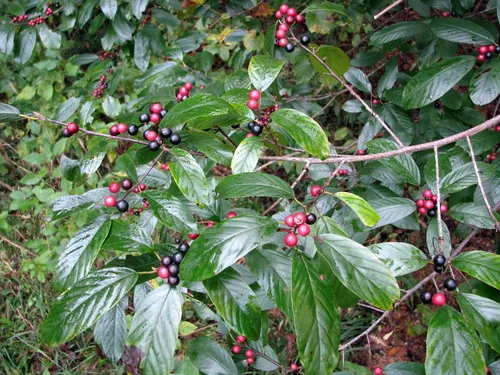
Carolina buckthorn (Frangula caroliniana) is a deciduous native shrub to small tree of southeastern North American woodlands and edges, with glossy leaves, inconspicuous flowers, and red to black drupes on female plants. Height is commonly 10–20 feet (3–6 m), often multi-stemmed, fitting informal hedges, bird gardens, and oak-pine understories. Berries are eaten by birds; human edibility is not a selling point—treat fruit as wildlife food unless you have expert identification and preparation knowledge. Full sun to partial shade; tolerates a range of soils from sandy to clay if drainage is reasonable. Moderate moisture is ideal; tolerates short dry spells once established but not desert conditions. Mulch young plants to reduce competition. Sow seed after cold stratification; germination can be slow. Softwood cuttings in summer with hormone under mist. Transplant small seedlings during dormancy; larger specimens resent bare-rooting. Ornamental and wildlife peak at fruit color—photograph rather than harvest for human tables. Prune for structure in late winter; remove root suckers if a single-trunk form is desired.
Permaculture Functions
- Wildlife Attractor: red-to-black drupes on female plants feed songbirds -- while thicket branching offers nest sites along oak-pine understory edges.
- Ornamental: glossy simple leaves and fine twigging read polished -- in native designs even though the species behaves like a quiet woodland shrub rather than a showy exotic.
- Border Plant: multi-stem screens soften sight lines along paths and pasture fences -- where managers want a native Rhamnaceae edge instead of ornamental buckthorn imports.
- Erosion Control: fibrous roots stabilize cuts, old-field margins, and thin upland clay -- where periodic drought still beats constant bogging for this small tree.
Companion Planting
Also mentioned as companions:
- Flowering Dogwood
- Oak
Not yet profiled in PermiePortal
- Dioecious plants — need male and female individuals nearby for heavy fruit set on females
- Berries not casual human food — verify species and preparation before any ingestion experiments
Threats & Pressure