About
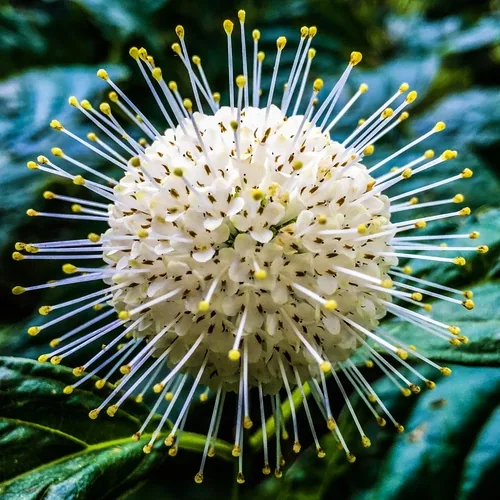
Buttonbush (Cephalanthus occidentalis) is a deciduous wetland shrub native to much of North America, bearing glossy leaves and extraordinary spherical white flower heads that look like pincushions in early summer. Plants typically reach 6–12 feet (2–3.5 m), often wider than tall, rooting in saturated soils along ponds, swales, and river margins. It is a flagship species for rain gardens, bioswales, and wildlife ponds from cool-temperate to humid subtropical climates. Full sun to partial shade; flowers best with strong light. Tolerates standing water for periods each year; also grows in moist garden soil if never allowed to dry completely. Not a desert plant—roots expect steady moisture. Sow seed after cold stratification or direct-sow in wet outdoor beds. Hardwood cuttings taken in late winter root under mist. Transplant container liners into soggy sites; mulch to exclude competing weeds. Not a food shrub for humans—value is ecological and ornamental. Deadhead if you dislike brown balls, or leave seed heads for winter structure. Cut back old stems hard in late winter every few years to rejuvenate very leggy specimens.
Permaculture Functions
- Wildlife Attractor: Cephalanthus occidentalis spherical white heads pack hundreds of pin-tube flowers that sweat nectar for bumblebees, tiger swallowtails, and hummingbirds -- along pond boardwalks.
- Water Retention: Roots tolerate weeks of inundation each year -- so rain-garden engineers place it in the lowest bowl where sheet flow ponds after storms.
- Erosion Control: Fibrous mats lock pond mud under duck traffic -- cutting bank slough when water level swings between summer pool and winter drawdown.
- Ornamental: Glossy elliptic leaves and gumball blooms read intentional from boardwalks -- marking wetland habitat you built on purpose instead of accidental cattail takeover.
Companion Planting
- Droughty berms — chronic wilting and dieback without irrigation
- Heavy shade — sparse flowering and lanky growth
Threats & Pressure