About
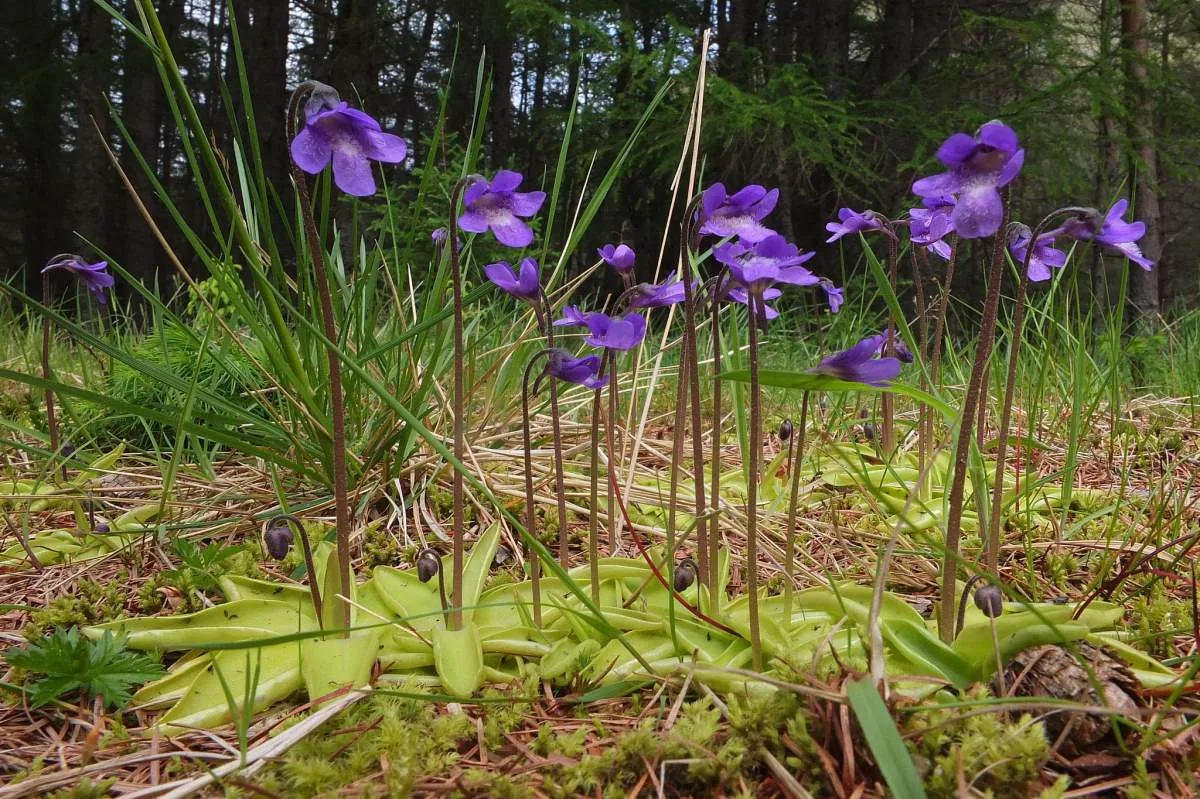
Butterworts are carnivorous plants with rosettes of succulent, glandular leaves that excrete a sticky fluid to trap insects. They are typically found in moist, acidic environments such as bogs and fens. Butterworts produce attractive, funnel-shaped flowers that can be white, pink, or purple. They require partial shade to full sun and consistently moist, well-draining soil to thrive. Seed: Sow seeds on the surface of a moist peat and sand mix; do not cover, as they require light to germinate. Maintain high humidity and temperatures between 60-75°F (16-24°C). Germination may take several weeks. Leaf Pullings: Gently pull a leaf from the base and place it on moist sphagnum moss; new plantlets may form at the base of the leaf. Sun: Partial shade to full sun; avoid intense midday sun, especially in hotter climates. Water: Keep soil consistently moist using distilled or rainwater; avoid tap water due to mineral sensitivity. Ensure good drainage to prevent root rot. Butterworts are primarily cultivated for ornamental purposes and natural pest control rather than harvest.
Permaculture Functions
- Pest Management: Pinguicula spp. leaf mucilage traps fungus gnats and shore flies before they cycle generations in peat trays -- so seedlings get a week without adult egg lay when rosettes sit touching soil.
- Ground Cover: Mexican hybrids form tight living rugs under 10 cm tall in mineral grit -- shading moss between rocks where humidity stays high all day.
- Ornamental: Pink or violet snapdragon-like flowers hover above jeweled leaves, reading as collector-grade ground layer -- on humid patios and greenhouse benches.
- Pollinator: Small native halictids still reach nectar in temperate bog gardens -- if you keep flowers above water film and avoid oil sprays that glue traps shut.
Companion Planting
Also mentioned as companions:
- Sphagnum Moss
Not yet profiled in PermiePortal
- Plants requiring high nutrient soils