About
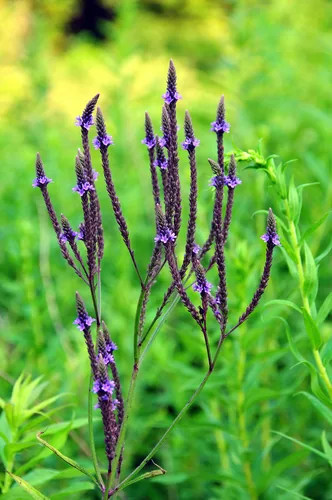
Blue vervain (Verbena hastata) is a native North American perennial of moist meadows and stream edges, bearing slender spikes of small blue-violet flowers from midsummer into fall. Plants reach about 90–150 cm (3–5 feet) tall with opposite, lance-shaped leaves and stiffly upright stems. Full sun to light shade; blooms heaviest in sun. Likes consistently moist, average to rich soil; tolerates brief inundation. In Florida and Puerto Rico, site it in rain gardens, pond margins, or irrigated pollinator beds—dry sand will stunt it quickly. Mulch to buffer soil temperature and reduce evaporation in the dry season. Seeds: Cold-moist stratify 4–8 weeks or winter-sow outdoors; surface-sow or barely cover; germination improves with fluctuating temperatures. Division: Split crowns in early spring before flowering; keep divisions watered until established. For traditional herb use, gather aerial parts at early-to-mid bloom on dry mornings; dry promptly with good airflow. Leave late flowers for migrating pollinators.
Permaculture Functions
- Medicinal: Verbena hastata aerial parts are harvested at early-to-mid spike for bitter relaxant teas in Appalachian materia medica -- verbenalin content shifts after full anthesis; avoid internal use in pregnancy without modern monograph review.
- Pollinator: Slender blue-violet spikes stay open from July into October, feeding bumblebees, thread-waisted wasps, and sphinx moths when goldenrod is peaking -- each floret opens bottom-to-top so the spike stays nectar-active for weeks.
- Wildlife Attractor: Finches and swamp sparrows strip dry capsules in November sloughs -- stiff winter stems hold snow above crown buds so syrphid fly pupae overwinter in hollow pith until spring aphid flights begin.
- Biomass: Three- to five-foot (0.9-1.5 m) stems from moist soil yield soft, high-moisture slash that breaks down in two weeks on rain-garden berms -- pair with coarser Joe Pye stems so the mulch mat does not go anaerobic.
Companion Planting
Threats & Pressure