About
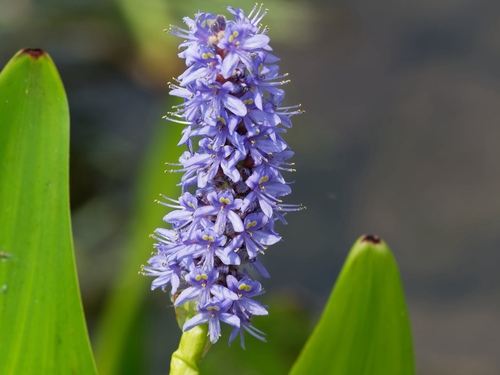
Blue pickerelweed (Pontederia cordata) is a native emergent wetland perennial of the Americas, forming clumps of glossy arrow-shaped leaves and spikes of violet-blue flowers above the waterline. In shallow ponds, ditches, and pond margins it typically reaches 30–120 cm (1–4 feet) tall depending on depth and fertility. 🌞💧 Sun and Water Requirements: - Full sun to light shade; best bloom in sun. - Roots in submerged soil or mud with 5–30 cm (2–12 inches) or more of water over the crown—classic pond-edge or rain-garden pool plant. In Florida and Puerto Rico it grows vigorously year-round in warm water; freshen stagnant pockets occasionally to reduce mosquito breeding. - Do not let rhizomes dry out during establishment. ✂️ Methods to Propagate: - Division: Split thick clumps in spring before peak heat; replant crowns into aquatic planting baskets or pond muck. - Offsets: Small plantlets often form beside the mother clump; separate and anchor in shallow mud. 🌾 Harvest / Best Use Timing: - For habitat value, leave flowers and seed for wildlife. If managing spread, thin excess rhizomes in late winter before the wet-season growth surge.
Permaculture Functions
- **Aquatic**: Defines the emergent layer where water meets land—filtration, shade, and structure for micro-aquatic life.
- **Wildlife Attractor**: Ducks and other waterfowl use seeds; tadpoles and small fish use roots for cover.
- **Pollinator**: Flowers draw bees and butterflies that work the shoreline mosaic.
- **Erosion Control**: Rhizomes stabilize muddy banks and reduce wave-lap erosion on pond liners and natural edges.
Pickerelweed anchors the water’s edge in integrated designs:
Practitioner Notes
- Rhizomes travel underwater—sink a pond liner vertical skirt or harvest the wanderers yearly if geometry matters.
- Basket planting slows empire building while still giving frogs a ladder out of deep water.
- A hard freeze blackens foliage; clip mush after thaw so new spears do not fight last year’s slime.
- Flowers open bottom-to-top on the spike—deadhead only if you hate seedlings, otherwise let ducks and finches bill the chaff.
Companion Planting
- Cattail
- Duckweed
- Softstem Bulrush
Pest Pressure