About
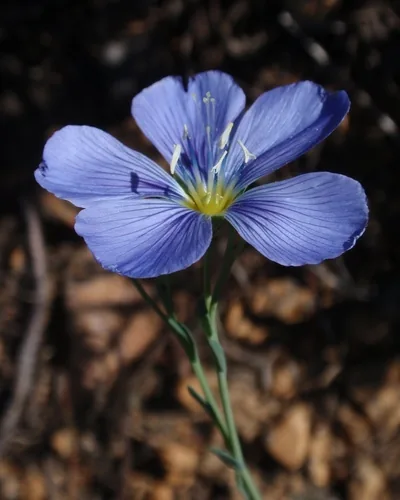
Blue flax (Linum lewisii) is a short-lived perennial or sometimes biennial wildflower native to western North America, valued for sky-blue flowers on wiry stems and narrow gray-green leaves. Mature plants reach about 45–90 cm (18–36 inches) tall with an airy, upright habit and often reseed politely in open, sunny spots. Full sun to very light afternoon shade; shade reduces bloom. Well-drained, lean to average soil; dislikes wet feet. In subtropical and tropical Americas, treat as a cool-season accent or grow in drier, breezy sites—humid wet-season saturation shortens life. Moderate water during establishment; thereafter fairly drought-tolerant. Seeds: Sow in fall or early spring; lightly cover seed; germinates in 2–4 weeks with warmth. Transplants: Move young self-sown seedlings while small; older taproots resent disturbance. Collect seeds when capsules brown and rattle. Stems historically used for cordage fiber in small homestead batches; flowers are short-lived in the vase but lovely for seasonal bouquets.
Permaculture Functions
- Pollinator: Linum lewisii opens sky-blue saucers on wiry stems each morning -- giving small solitary bees a landing pad in lean prairie edges where heavier flowers stay closed.
- Ornamental: Gray-green needles and upright habit carry color at knee height -- along gravel paths without irrigation guilt in dry summers.
- Wildlife Attractor: Finches and juncos strip dry capsules when stems stand into winter -- so leave a patch uncut if you want free seeding next year.
- Fiber: Bast from stems yields short, tough cordage in homestead-scale batches -- when you rett and scrape after seed ripens, nothing like long-flax linen mills.
Companion Planting
Threats & Pressure