About
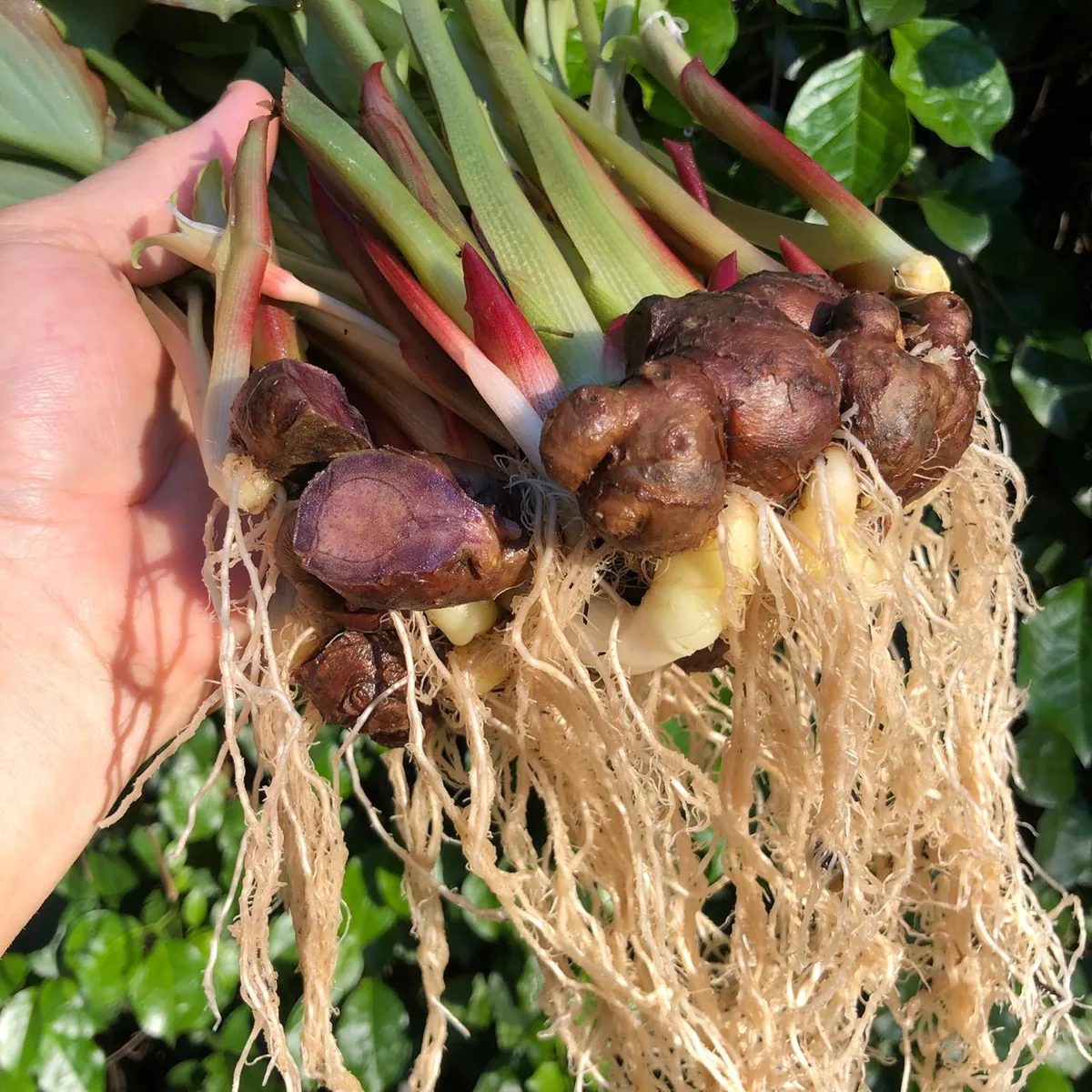
Black Ginger (*Kaempferia parviflora*) is a small, herbaceous perennial plant native to Thailand and Southeast Asia. It grows to about 20-30 cm (8-12 inches) tall, with dark green, glossy leaves that sometimes exhibit purple undersides. It produces small, pale lavender or purple flowers, often close to the ground. The most notable part of the plant is its underground rhizomes, which have a deep purplish-black coloration. 🌞💧 Sun and Water Requirements: Black Ginger thrives in partial shade to full sun but prefers filtered light in hot climates. It requires well-draining, loamy, or sandy soil with consistent moisture, although it does not tolerate waterlogging. 🫘 Methods to Propagate: Propagation is primarily done through rhizome division. The best time to plant is in spring, ensuring rhizome pieces have at least one growth node. The rhizomes should be planted 2.5-5 cm (1-2 inches) deep and kept moist until shoots emerge. 🧑🌾👩🌾 When to Harvest: Rhizomes are ready for harvest about 8-10 months after planting, typically when the foliage begins to yellow and die back. After harvesting, the rhizomes should be cured and stored in a dry, cool environment.
Permaculture Functions
- Medicinal: Kaempferia parviflora dark rhizomes enter Thai tonics for stamina and circulation trials where methoxyflavones are the cited actives -- drug interaction research still beats gym-bro dosing spreadsheets.
- Edible: Young rhizome slices pickle crisp like peppery radish while mature pieces flavor soups -- purple-black interior color is your quick field ID versus other small ginger relatives.
- Ground Cover: Low 20-30 cm mats spread by rhizome under shade trees without stolon chaos of true mint -- winter dry rest in pots prevents rot more reliably than sympathy watering.