About
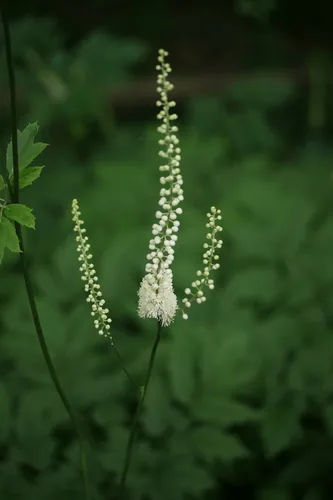
Black cohosh (Actaea racemosa) is a long-lived herbaceous perennial of cool eastern North American woodlands, sending up bold compound leaves and tall wands of creamy white flowers in midsummer that can reach 4–7 feet (1.2–2.1 m). The inflorescences are strongly scented, attractive to pollinating flies and beetles, and persist as architectural spikes. Roots and rhizomes have a long documented place in herbal practice—modern use should respect potency, contraindications, and sustainable harvest ethics. Partial to full shade; tolerates dappled morning sun in northern climates but scorches in hot afternoon exposure. Rich, moist, well-drained soil high in organic matter mimics forest edge sites; drought causes collapse of tall flowering stems. Mulch with leaf mold to keep roots cool. Sow seed after warm-cold stratification cycles; germination can be slow and irregular. Divide mature crowns in early spring before growth or in fall, keeping each division well rooted. Patience is required—plants resent frequent disturbance. For medicine, dig rhizomes in fall after several years of establishment from cultivated patches only—never deplete wild stands. Dry slices with airflow before storage. For garden use, leave flowers for pollinators and collect seed when follicles split if breeding.
Permaculture Functions
- Medicinal: Actaea racemosa rhizome is standardized in menopause-support tinctures where hepatotoxicity debates still move market to vetted suppliers -- wild digging is off the table; grow a dedicated patch for ethical harvest.
- Ornamental: Cream "fairy candle" racemes to 2 m punctuate shade borders after spring ephemerals fade -- musky scent attracts flies, not humans, so site downwind of dining patios.
- Wildlife Attractor: Small flies and beetles work the inflorescences when bee-heavy meadows are quiet -- leave spikes standing if you want seed for goldfinches after frost.
- Mulcher: Large dissected leaves build deep leaf mold under oaks and maples -- cut stems after hard freeze if tidy winter views matter more than standing insect habitat.
Companion Planting
Also mentioned as companions:
- Solomon's Seal
- Red Oak
Not yet profiled in PermiePortal
- Hepatotoxicity concerns with concentrated extracts — consult qualified practitioners; not casual self-experimentation
- Pregnancy and liver conditions — widely contraindicated in professional herb literature
Threats & Pressure