About
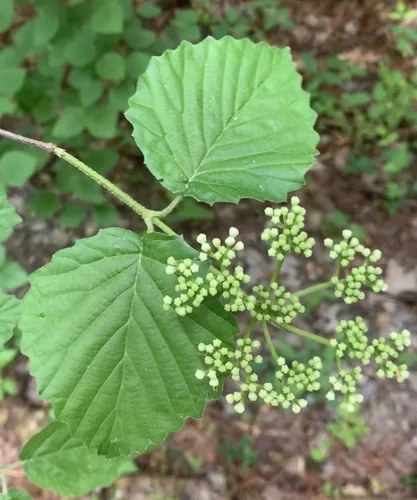
Arrowwood viburnum (Viburnum dentatum) is a durable deciduous shrub native across much of eastern North America, forming a rounded clump typically 6–10 feet (2–3 m) with coarsely toothed leaves and flat white flower clusters in late spring. Metallic blue-black drupes ripen in late summer to fall, a critical fat source for migrating birds. It is a workhorse for hedgerows, utility strips, and rain-garden berms where soil fluctuates between moist and average. Full sun to partial shade; best fruiting with at least several hours of direct sun. Adapts to a wide soil range from sandy to heavy clay if drainage is not stagnant; tolerates periodic wet feet better than many upland shrubs. Mulch to reduce weed competition while young. Sow cleaned seed after warm-moist then cold-moist stratification, or direct-sow in fall. Softwood cuttings in early summer with hormone under mist. Layer low branches; detach after rooting. Berries are astringent for humans—leave them for wildlife or use only in experimental preserves with heavy sweetening. Prune immediately after flowering if you must reduce height; late cuts remove next year’s blooms. Renew old thickets by removing a few oldest canes at the base yearly.
Permaculture Functions
- Wildlife Attractor: Viburnum dentatum flat white late-spring cymes feed bees and beetles while metallic blue drupes fuel migrating thrushes and winter finches -- plant two unrelated clones if fruit set looks shy.
- Border Plant: Rounded multistem thickets screen utility views along moist suburban edges without bamboo arrogance -- prune after flowering if height bumps eaves, not in autumn when you remove next year's buds.
- Erosion Control: Fibrous roots mat ditch banks and rain-garden berms where intermittent moisture would kill drought shrubs -- tolerates periodic wet feet better than upland ninebark on the same site.
- Ornamental: Coarsely toothed clean foliage and blue-black fruit clusters give three-season structure -- viburnum leaf beetle regions demand scouting for skeletonized leaves in late spring, not denial.
Companion Planting
Also mentioned as companions:
- Red Osier Dogwood
- Ninebark
Not yet profiled in PermiePortal
- Viburnum Leaf Beetle — scout for skeletonized leaves in late spring in regions where it occurs
- Powdery Mildew — improve air flow if hedges are sheared too tight