About
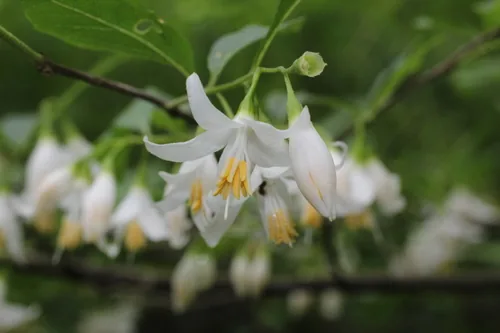
American snowbell (Styrax americanus) is a deciduous to semi-evergreen shrub of southeastern North American swamps, stream banks, and acid wetlands, forming a delicate fountain of slender branches hung with bell-shaped white flowers in late spring. Mature height is often 5–10 feet (1.5–3 m), sometimes taller in shade with a vase shape. It brings refined wetland beauty to rain gardens, pond margins, and humid food forest edges from temperate parts of the Gulf Coastal Plain into subtropical transition zones. Partial shade to full sun where soil moisture is reliable; afternoon shade reduces stress in the warmest sites. Requires acidic, organic-rich soil that stays moist but not permanently stagnant; tolerates brief inundation typical of swamp edges. Mulch with leaf mold or pine fines to mimic natural humus. Sow seed after warm-cold stratification cycles or fall sow outdoors in moist beds. Softwood cuttings in early summer under mist root with hormone. Air-layer low branches in humid weather if seed is scarce. Not a primary food crop—value is ornamental and ecological. Prune after flowering to shape; avoid heavy shearing that destroys the natural weeping line. Collect seed when capsules brown if you breed or share genetics.
Permaculture Functions
- Ornamental: Styrax americanus weeping branches carry clusters of white bells that read delicate against coarse wetland neighbors -- plant slightly uphill so you look up into flowers instead of down at mulch.
- Wildlife Attractor: Nectar rewards small bees while fine twigs shelter wrens at swamp edges -- blooms run late spring when acid-soil specialists need honest pollinator service.
- Water Retention: Roots tolerate periodic inundation in rain gardens and pond margins where stormwater pauses long enough for sediment to drop -- leaf mold mulch keeps pH honest without limestone topdress mistakes.
- Border Plant: Fountain habit softens transitions between paths and soggy ground without straight-line plastic edging -- chlorosis on alkaline irrigation is the usual failure mode, not pests.
Companion Planting
- Alkaline irrigation or limestone mulch — chlorosis on acid-loving Styrax
- Droughty berms without supplemental water — leaf scorch and dieback in hot dry spells
Threats & Pressure