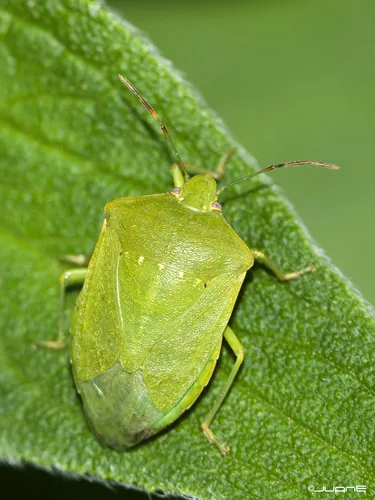
Field Identification
If new growth is curling, yellowing, sticky, or chewed, southern green stink bug may already be on the plant. This pest often builds quietly, then damage appears all at once. Feeding stress weakens growth, reduces yield, and opens the door to secondary disease. Early cleanup is much easier than fighting a full population surge later.
Inspect the newest growth first: leaf undersides, flower buds, stem joints, and tender tips where pests gather. Look for body shape, color, eggs, cast skins, honeydew, webbing, or fresh puncture marks. A hand lens and a white paper tap test help reveal small life stages. Matching visible pests with fresh plant damage confirms active infestation.
Not sure what you have? Use the symptom diagnosis tool →
How to Deal With It
Organic Control Methods
Trissolcus basalis and Telenomus wasps parasitize stink bug eggs -- you see dark, empty egg clusters when they work. Assassin bugs and spiders pick off nymphs. Flowering strips feed adult parasitoids when cash crops are still small. Broad-spectrum pyrethrin during egg weeks kills parasitoids while bugs walk back from headlands.
Mow or manage weed hosts near fields before fruit set -- crucifers and legumes in ditches stack adults before they move into cash crops. Use row covers on beans and solanums until flowering if pollination allows. Scout early nymph clusters; late instars are armored.
Plant millet, buckwheat, or mustard trap crops ahead of cash crops and destroy or flame trap rows when adults pile on -- late traps become nurseries. Rotate crops so overwintering adults meet confusing rotations. Avoid excess nitrogen that masks injury until pods fail.
Shake bushes into soapy water in early morning when adults are sluggish. Vacuum aggregations on trap rows during cool hours. For backyard tomatoes, hand-pick nymphs while they still cluster -- dull work, fast payoff.
Neem and soap target soft nymphs with full coverage -- adults shrug. Kaolin on fruit reduces feeding if film stays even after wind. Spray at dusk to spare bees on open blooms. Repeat every few days while generations overlap; stink bugs keep walking in from edges.
Let Nature Handle It
Natural Enemies
- Trissolcus basalis
- Telenomus spp.
- Assassin Bugs