Field Identification
Southern chinch bug is a specialist pest of St. Augustinegrass that pierces stolons and injects enzymes, causing yellowing patches that expand in full sun during hot dry weather. Thatch gives nymphs a humid refuge while outer leaves look droughty. It is a major turf issue in humid subtropical lawns and commercial sod across the Gulf and Atlantic coastal plains wherever this grass is grown.
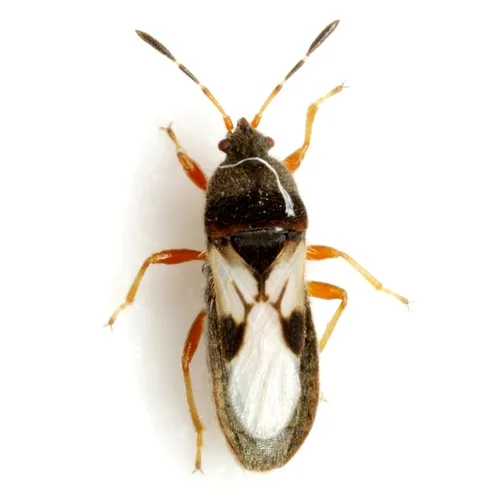
Part stolons near the soil line to see early red nymphs with a pale band across the abdomen and darker later instars. Soap flush forces nymphs to the surface for counting. Damage begins along pavement edges, tree driplines, and south slopes first. Compare with generic chinch bugs on other grasses -- host and regional distribution differ.
Not sure what you have? Use the symptom diagnosis tool →
How to Deal With It
Organic Control Methods
Beauveria bassiana applications can infect nymphs when humidity after spray stays adequate for spore germination. Minute pirate bugs and big-eyed bugs (Geocoris spp.) consume nymphs in unsprayed lawns. Egg parasitoids help in research plots when diverse vegetation supports their populations. Avoid broad-spectrum pyrethroid perimeter sprays that remove predators while chinch rebounds in thatch.
Manage thatch with proper mowing height, sensible nitrogen, and occasional vertical mowing or dethatching when turf tolerates it. Irrigate deeply and less often to encourage deep roots that tolerate localized feeding. Choose improved St. Augustine cultivars with documented chinch tolerance where sod farms supply them.
Raise mowing height during summer stress. Spot-check hot spots weekly from late spring through early fall. Remove woody debris piles that create dry edges against irrigated turf. Do not spread clippings from infested lawns onto clean sites during active outbreaks.
For small lawns, vigorous watering can dislodge nymphs briefly and reduce heat stress while other tactics work. Resod badly damaged areas only after you commit to thatch management or new sod will fail the same way.
Soaps labeled for turf use kill nymphs on contact when spray reaches the crown zone. Neem and essential oil products show variable field results -- test patches first. Repeat applications are usually needed because contact materials miss insects deep in thatch. Follow label temperature guidance to avoid phytotoxicity on stressed grass.
Let Nature Handle It
Natural Enemies
- Minute Pirate Bugs
- Parasitic Wasps
- Ground Beetles