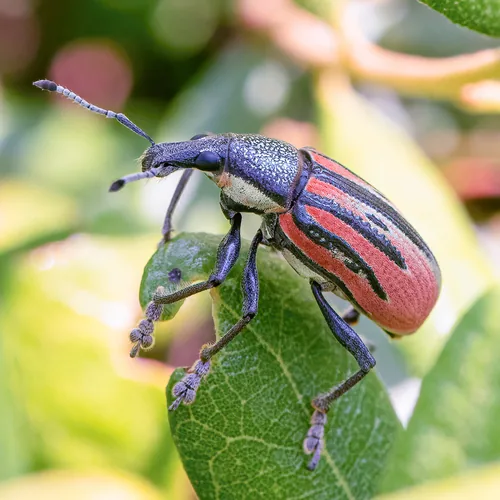
Field Identification
If plants are wilting, notching at the edges, or fruit and roots show hidden feeding damage, diaprepes root weevil may be the cause. Adults chew above ground while larvae often feed out of sight inside soil, stems, or fruit. Damage builds quietly, then plants crash fast when roots are heavily hit. Act early so a small weevil problem does not become a season-long infestation.
Look for small beetles with a hard body and a distinct snout, usually active at dawn, dusk, or night. Check for crescent-shaped leaf notches, punctures in fruit, or tiny entry holes near stems. In soil or damaged tissue, larvae are often pale, legless, and curved in a C-shape. Fresh chew marks plus snout beetles or C-shaped grubs confirm active weevil pressure.
Not sure what you have? Use the symptom diagnosis tool →
How to Deal With It
Organic Control Methods
Steinernema riobrave and Heterorhabditis bacteriophora nematodes infect diaprepes larvae in moist soil when soil temperature fits product windows -- timing to vulnerable instars beats brand loyalty. Metarhizium fungi contribute when humidity stays high. Ants sometimes disturb larvae at soil surface; not reliable control. Nematodes fail in dry sand; irrigation scheduling matters.
Tedders traps and similar tools monitor adult flights -- rising catches mean tighten root inspections and nematode windows. Scout leaf notching on new flush; adults feed before laying in soil. Link tree health programs to root digs on suspect trees; grubs show up before crowns fall over.
Avoid compaction and over-irrigation that stack Phytophthora with weevil injury on roots. Remove alternate hosts such as unmanaged citrus relatives near groves. Coordinate area-wide trapping so adults meet more traps and fewer mates -- modest help, not magic.
Mass-trap research trials use color and aggregation cues; small holdings rely on hand collection at night with headlamps and soapy buckets. Landscape fabric barriers rarely stop strong fliers; focus on soil treatments and tree health.
Nematode applications target soil larvae -- water them in according to label. Kaolin on foliage reduces adult feeding and notching when film stays even; rebuild after rain. No organic spray fixes roots already girdled by larvae; tree removal sometimes beats repeated heroic sprays.
Let Nature Handle It
Natural Enemies
- Steinernema riobrave
- Heterorhabditis bacteriophora
- Metarhizium spp.