About
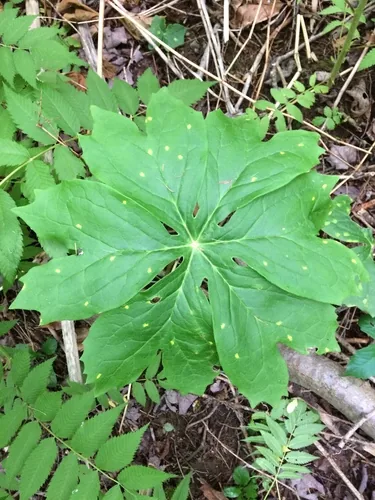
Mayapple (Podophyllum peltatum) is a spring ephemeral of eastern North American deciduous forests, spreading by underground rhizomes into colonies of twin umbrella leaves. A single nodding white flower hides beneath the forked leaf pair; ripe golden fruit is edible only when fully soft, while other tissues remain toxic. It is a signature ground layer for rich, shady food forests and native plantings where summer canopy keeps soil cool. Shade to dappled light; full sun burns foliage unless soil stays very moist and cool. Moderate moisture; likes rich, well-drained humus that never bakes dry for weeks. Cold winters required for dormancy; not suited to frost-free lowland tropics. Division of rhizome segments with at least one bud in autumn after leaves yellow. Seeds: clean pulp from ripe fruit, cold-moist stratify several months, sow in deep flats; seedlings take years to flower. Transplant small offsets in early spring with plenty of root mass and leaf litter mulch. Only fully ripe, soft yellow fruit is eaten in tiny amounts by those who know the plant; unripe fruit and other parts stay toxic. For propagation, collect fruit when fragrant and yielding, not when firm and green. Leave most fruit for wildlife and seeding—colonies expand slowly from overharvest.
Permaculture Functions
- Wildlife Attractor: Podophyllum peltatum nodding white flowers under twin umbrellas attract early pollinators while lemon-yellow ripe fruit feeds box turtles -- leave fruit for wildlife if ethics trump jam curiosity.
- Medicinal: Rhizomes contain podophyllotoxin used in professional wart compounds -- extreme toxicity means home experimentation is malpractice, not folk craft.
- Ground Cover: Rhizomatous colonies of paired peltate leaves exclude garlic mustard and other invaders in rich mesic shade -- foot traffic collapses rhizomes, so stake paths through colonies.
Companion Planting
- All plant parts except fully ripe fruit are toxic if eaten