About
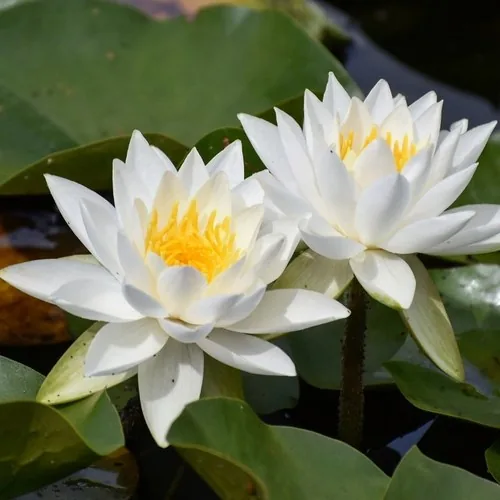
American waterlily (Nymphaea odorata) is a widespread native aquatic perennial with floating round leaves and fragrant white (sometimes pink-tinged) flowers that open by day across still ponds, lakes, and slow backwaters. Rhizomes creep in shallow muck while leaf stalks reach the surface from roughly 1–6 feet (0.3–1.8 m) of water depending on form and clarity. It fits permaculture water features as a food, medicine, and habitat plant—when used with containment forethought in small artificial ponds. Full sun for maximum bloom; light shade still grows leaves but flowers shy. Requires cleanish, still or slow fresh water; tolerates seasonal level changes if rhizomes stay anchored in substrate. Excess lawn fertilizer runoff produces algae blooms that smother leaves—fix the watershed, not just the symptom. Divide rhizomes in spring as shoots emerge, ensuring each piece has roots and a growing tip. Pot divisions in heavy loam submerged at the correct depth for your container. Sow seed in very warm shallow water after careful scarification; seedlings grow slowly compared to divisions. Young leaves and flower petals appear in some traditional foods—verify local regulations and sustainable harvest limits before collecting from wild waters. Rhizomes were historically used where legal and abundant; never deplete sensitive populations for a trend. In garden tubs, thin annually to prevent complete surface cover.
Permaculture Functions
- Edible: Nymphaea odorata young leaves and rhizomes appear in some Indigenous recipes where populations are abundant and harvest is permitted -- skip urban retention ponds because heavy metals do not cook out.
- Aquatic: Round floating leaves and long petioles cycle nutrients from pond muck while giving small fish shade cover under pads -- rhizomes creep in 30–180 cm depths depending on form and water clarity.
- Wildlife Attractor: Fragrant white day flowers pull beetles and bees while submerged stems shelter dragonfly naiads -- koi treat young pads as salad unless you cage pots.
- Ornamental: Classic temperate water-garden look using verified native ecotypes -- repot crowded rhizomes every few years or bloom size shrinks while leaves pretend vigor.
- Shade Provider: Expanding pads cut sunlight reaching planktonic algae, cooling water a degree or two in small lined basins -- thin surface cover if dissolved oxygen drops for stocked fish during heat spikes.
Companion Planting
- Small ornamental ponds — unchecked rhizomes can carpet the surface and clog intakes
- Non-native waterlily bans — some regions restrict imports; use verified native material
Threats & Pressure