About
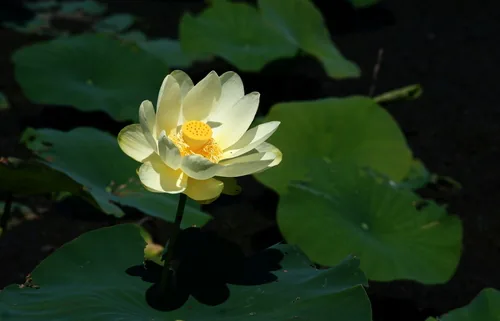
American lotus (Nelumbo lutea) is a native perennial aquatic of still, shallow water bodies across warm-temperate to subtropical North America, famous for broad floating leaves, fragrant pale yellow flowers, and edible seeds and young rhizome tips used in traditional cuisines. Plants spread by rhizomes in muck or silty bottoms and can cover large areas where depth stays roughly 6–24 inches (15–60 cm) over a stable substrate. In designed systems it is a centerpiece species for pond edges, constructed wetlands, and wildlife pools—provided you respect its talent for expansion. Full sun for strongest flowering and seed set; shade weakens bloom. Requires standing or very slow-moving fresh water; tolerates seasonal water-level shifts if rhizomes remain submerged or damp during growth. Heavy pollution or chronic herbicide drift kills the honest way first. Divide dormant rhizome sections in early spring before new growth hardens, keeping each piece with growing tips. Sow scarified seed into warm shallow water after frost risk in the zone; seedlings root down into pond muck. Containerize in large submerged tubs if you need to limit spread in small ponds. Gather young leaves, stems, or rhizome tips only where law and land ethics allow; regulations vary widely. Collect ripe seeds from receptacles when they loosen—dry and parch before cracking. Stop harvest if local populations are protected or stressed.
Permaculture Functions
- Edible: Nelumbo lutea seeds from receptacles parched like popcorn and young rhizome tips enter Indigenous cuisines where harvest is legal and sustainable -- never strip public wetlands without permits and ethics checks.
- Aquatic: Rhizomes spread through muck in 15–60 cm water, cycling nutrients and stabilizing soft sediments that would otherwise fluff away with every motorboat wake -- containerize in submerged tubs if you need boundaries on ornamental ponds.
- Wildlife Attractor: Fragrant pale yellow flowers pull beetles and bees while seeds and empty receptacles feed ducks and turtles through fall -- expect noisy waterfowl if you grow in open farm ponds.
- Ornamental: Dinner-plate leaves and flowers held above water read as living sculpture -- plan access paths for annual rhizome surgery because one happy plant becomes a meadow fast.
- Shade Provider: Expanding peltate leaves shade surface water, cooling roots of submerged companions and damping algae blooms in small lined basins -- thin pads if dissolved oxygen crashes for stocked fish.
Companion Planting
- Small lined ponds — rhizomes can clog pumps and outgrow tubs without annual thinning
- Invasive listing checks — some regions regulate ornamental lotus relatives; verify local rules
Threats & Pressure