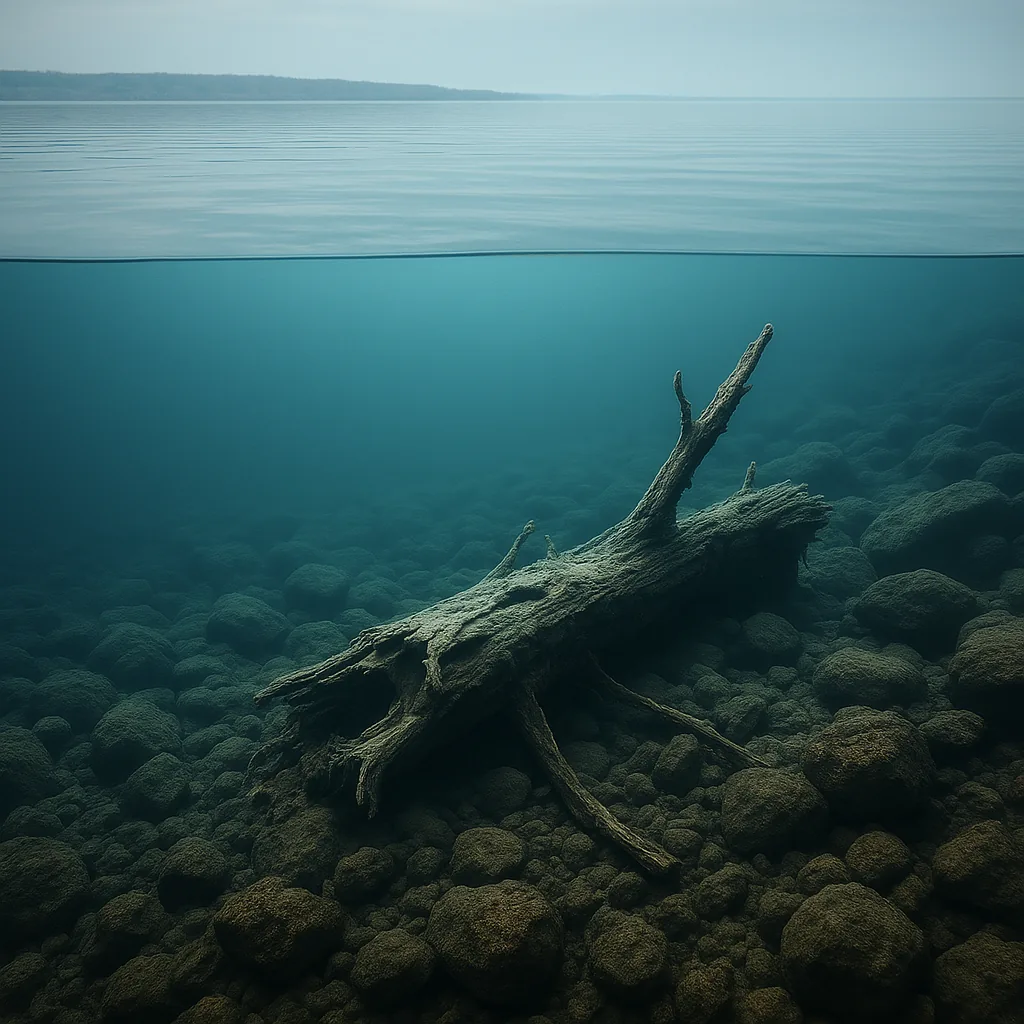
Lake Huron has never looked better — and that, dear reader, is precisely the problem. Scientists can now see eighty feet down into waters that glow like a tropical postcard. Instagram adores it. Scientific reports positively beam with approval.
We call this a victory. And why should we not?
In reality, we have merely emptied the tank and polished the glass to a mirror finish. The plankton, once so unruly, have been devoured by our industrious invasive mussels. The fish that once dined upon them now starve with admirable restraint. The food web has achieved a most commendable silence. What remains is a beautiful, sterile void — a death mask so flawless it might easily be mistaken for health.
This, then, is Lake Huron Syndrome: the modern art of ecological restoration. One simply makes the lake sparkle, posts the photograph, and politely pretends the body beneath is not rotting.
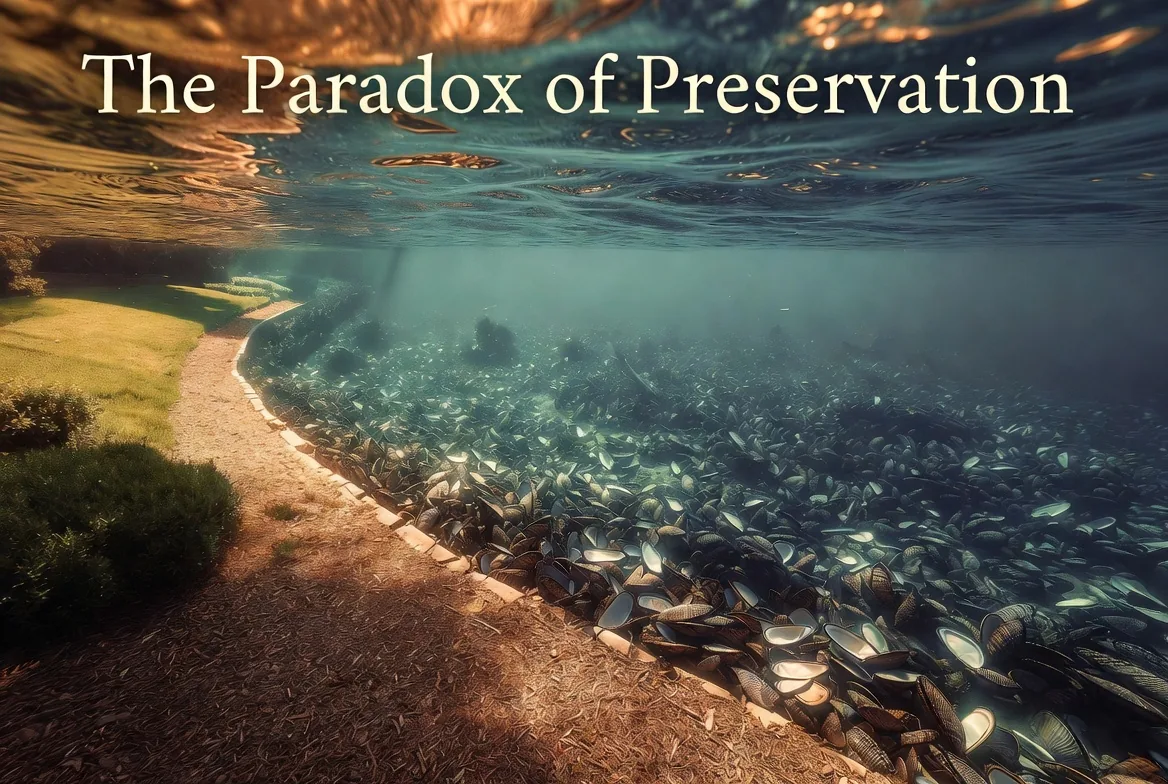
They assured us the lake was saved. The water is phosphorescent. The reports glow with satisfaction. The grant money has been spent to excellent effect.
Yet walk along the shoreline and one feels a subtle unease. The surface shines like the finest showroom floor, yet the house stands curiously empty. Family photographs lie face down. The refrigerator is unplugged. Something small and desperate appears to have taken up residence in the corners.
This is what “restoration” looks like in our enlightened age: we have gently ghosted the messy, teeming life and, with proper decorum, declared the resulting silence to be progress. When a lake grows too clear, when the bottom lies visible yet nothing stirs, when the insects have considerately vanished and the paths remain perfectly mulched — that is not healing. That is merely Photoshop for ecosystems.
We do not hate nature. We simply prefer her quiet, filtered, and easy to ignore.
The Modest Origins of Lake Huron Syndrome
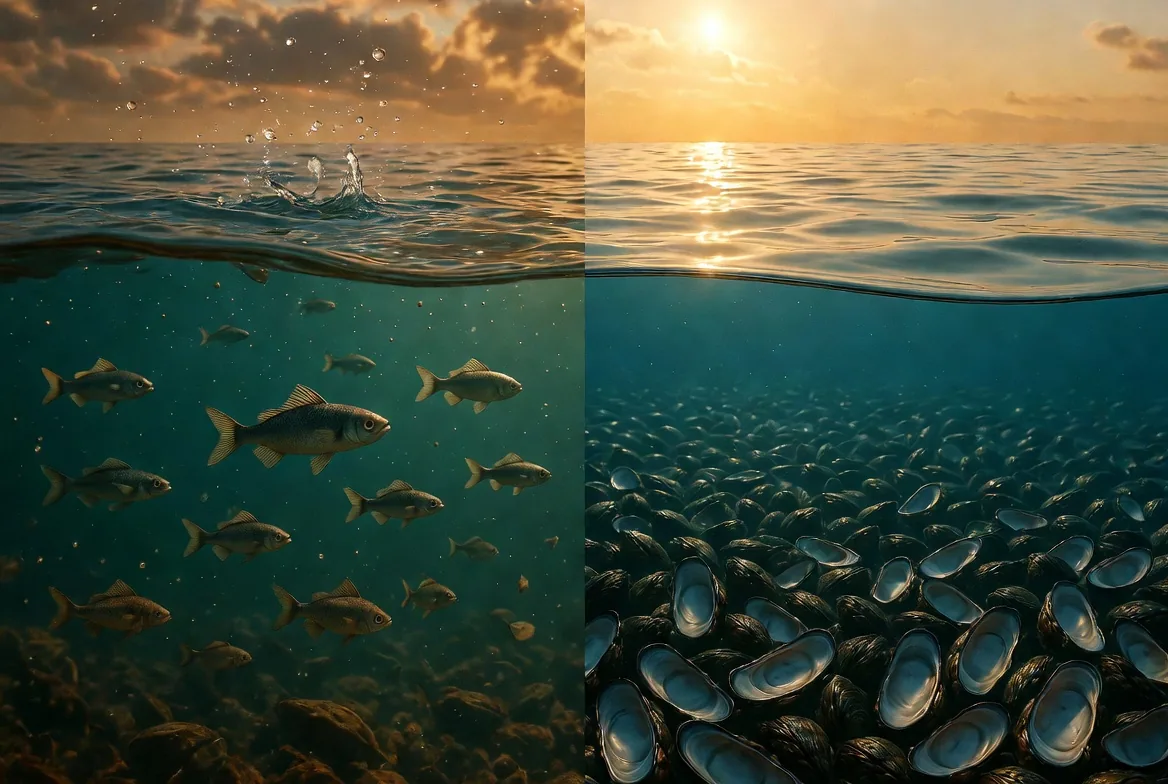
Once, Lake Huron suffered from a most regrettable excess of life — plankton clouding the water like vulgar fog, fish darting about in unpredictable fashion, entire food webs conducting themselves without the slightest regard for aesthetics. Visibility was poor. The system, by all accounts, functioned tolerably well, yet it offended the eye.
We addressed this inconvenience with characteristic ingenuity.
With the quiet assistance of ballast water and the general diligence of human commerce, invasive mussels were introduced and most obligingly allowed to perform their duties. Their efficiency is admirable beyond words. They filter the water column continuously, removing phytoplankton and all those lesser organisms dependent upon it, improving clarity to a degree previously thought unattainable by even the most optimistic conservationist.
The plankton declined first — an entirely acceptable trade for proper visibility. Then the zooplankton followed suit. Then the forage fish. Certain whitefish populations have since had the good grace to thin themselves out as well. The mussels now blanket the lakebed in extraordinary numbers, redirecting energy flows away from the wasteful open water and into more stable, less visible, and altogether tidier arrangements.
The result is a lake of remarkable clarity and minimal disturbance.
We consider this progress.
The Illusions We Cling To
The water sparkles because the mussels have eaten the life out of it with such thoroughness. Microplastics still drift through — fibers, fragments, beads that even these efficient creatures cannot fully accommodate. Legacy pollutants (mercury, PCBs) and the newer “forever chemicals” known as PFAS linger politely in the sediments, mussels, and remaining fish. They do not concern themselves with how clear the surface appears above them.
Zebra and quagga mussels did not “save” the lake — they merely flipped the food web with elegant dispatch. Round gobies have followed in their wake. Native species have lost ground with commendable sportsmanship. We have called the resulting pleasing thinness “balance.”
The surface tells one story. The mud, the microbes, and the missing links in the chain tell quite another.
Clarity Is Not Redemption
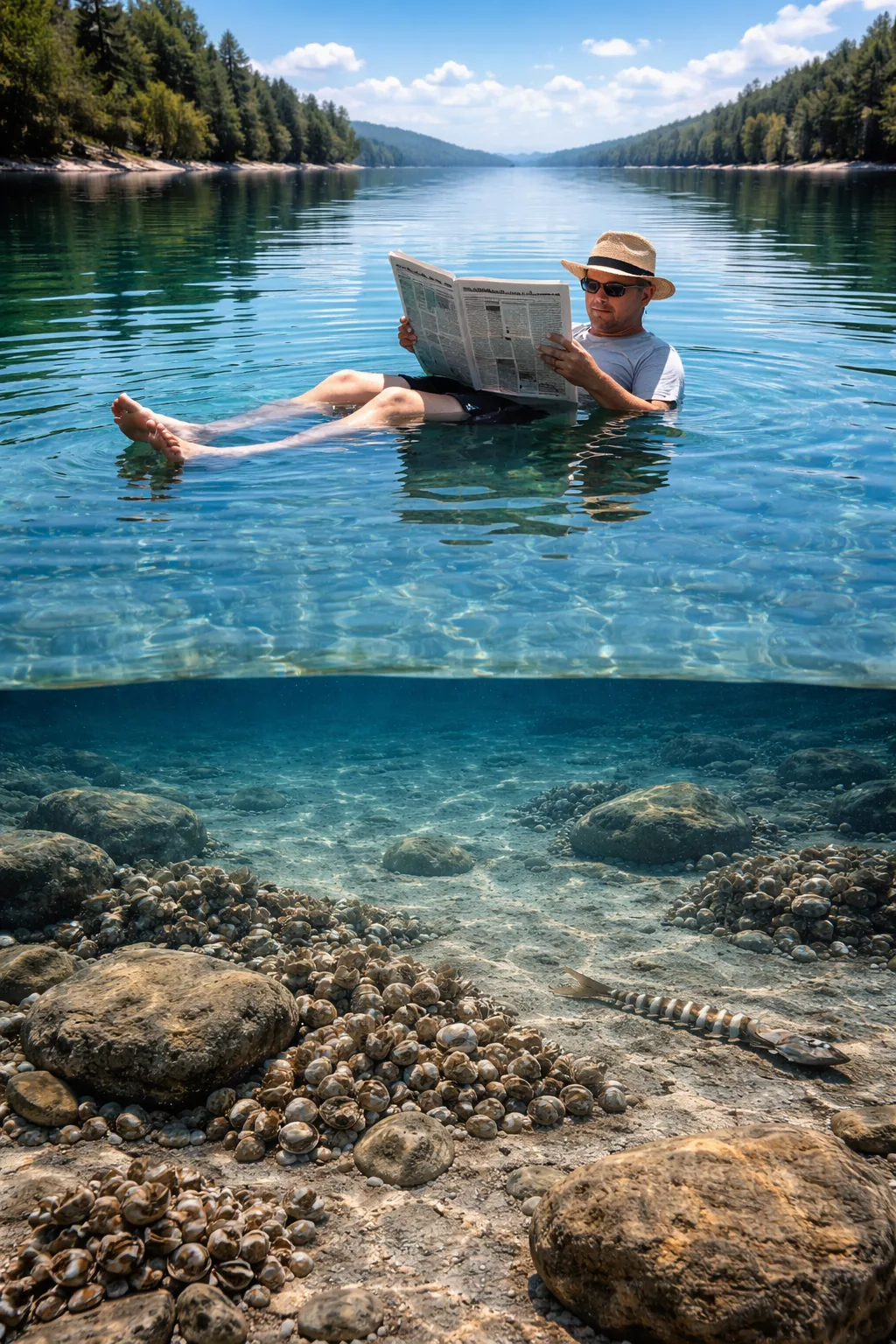
Lake Huron is not healed. It is quiet because it has less and less left to say.
Real lakes, one must admit, are distressingly messy. They require plankton clouds, microbial networks, murky bottoms, and complicated food webs that photograph poorly and resist simplification. True restoration would demand tolerating such untidiness rather than insisting upon Instagram-ready minimalism.
A more rational approach suggests itself. Having successfully streamlined the pelagic zone, we might now introduce even more efficient filter-feeders to polish the benthic layers. We could celebrate the “streamlined” fishery that remains — those few hardy whitefish that have adapted to a life of elegant scarcity. With further modest adjustments, we might achieve a lake so clear that one could read the morning paper from the surface while the ecosystem below attains perfect, undisturbed minimalism.
We saved the lake by killing it.
Laugh, if you will, at the absurdity. Then stop polishing the corpse and deal with the body — or, better still, consider how much clearer it might yet become.