Vermicomposting Guide
Vermicomposting uses red wigglers (Eisenia fetida) to break down organic waste into microbe-rich castings.
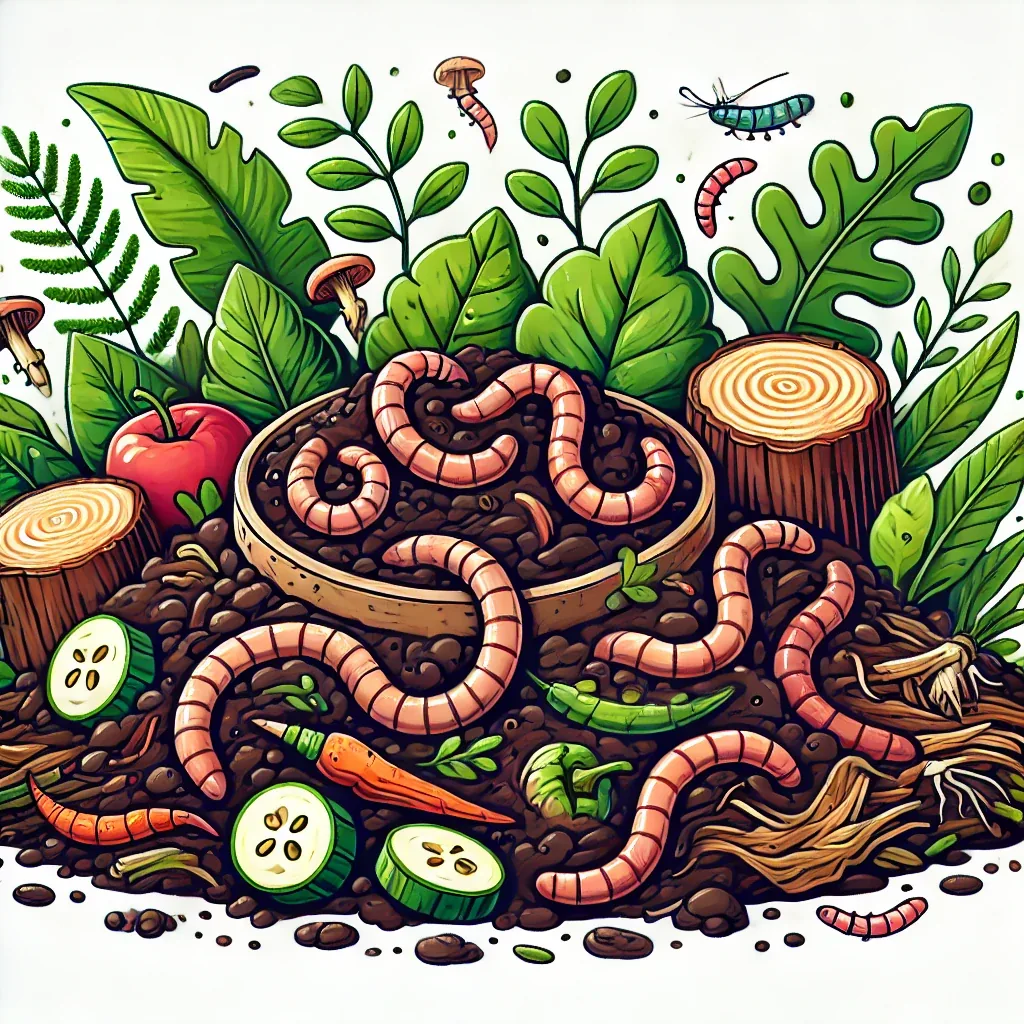
How Vermicomposting Works
Feed. Add veg scraps, coffee grounds, shredded leaves/cardboard.
Digest. Worms and microbes convert it to castings.
Harvest. Scoop finished vermicompost and use on beds & pots.
Benefits
- Improves soil health (slow-release N-P-K + microbes)
- Reduces landfill waste & methane
- Odorless when balanced; indoor friendly
- Cuts synthetic fertilizers; boosts biodiversity
Tips for Feeding
- Chop scraps small; balance greens (N) with browns (C)
- Don’t overfeed; keep bedding like a wrung-out sponge
- Rotate feeding spots so worms migrate evenly
Ideal Food for Eisenia fetida
- Fruit/veg scraps; coffee grounds; eggshells (calcium)
- Shredded leaves/paper/cardboard (carbon)
- Small amounts of cooked grains; go light on fatty seeds/nuts
Avoid: meat, dairy, oils, large citrus loads, spicy foods, pest-treated plants, pet/human waste.
How to Make a Vermicomposting Setup
1) Container. ~1 sq ft surface per lb scraps/week. Vent & drain holes.
2) Bedding. 3–4” moist shredded paper/leaves/coir (wrung-out sponge).
3) Worms. E. fetida, ~½–1 lb (500–1000 worms) per sq ft.
4) Food. Bury small amounts under bedding; no meat/dairy/oils.
5) Maintain. 55–77°F (13–25°C), dark, moist; add bedding if wet.
Harvesting Vermicompost
Feed one side so worms migrate; collect castings from the other.
Troubleshooting
- Fruit flies? Bury scraps; add dry carbon; reduce feed.
- Smell? Too wet/overfed → add bedding, slow inputs.
- Escapees? Check moisture/acid; increase airflow.