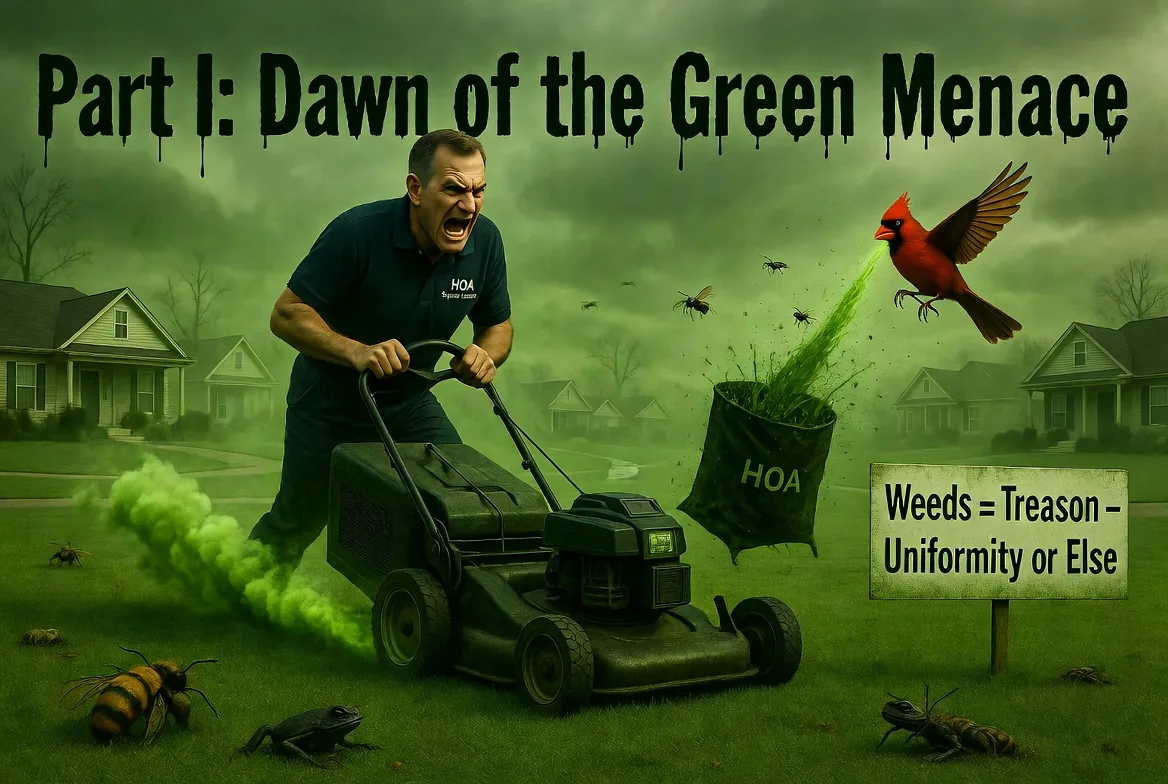
Part I: Dawn of the Green Menace
It’s 6:00 AM in the quiet kingdom of Suburbia.
The birds are trying to sing, but the mower drowns them out like a chainsaw in a monastery. A cardinal attempts a solo and is promptly sucked into the leaf bag — Ted doesn’t notice, or worse, he does.
Ted — self-appointed president-for-life of the HOA — isn’t just cutting grass.
He’s enforcing the Supreme Turf Doctrine, a faded pamphlet of mediocrity handed down alongside the Ceremonial Clipboards of Compliance from a long bloodline of illustrious HOA warlords. Each swore an oath to uphold yard uniformity with the zeal of a communist dictatorship — though under Ted, it manifests as monthly “lawn inspections” conducted from the comfort of his golf cart, a ceremonial whistle that doesn’t work, and policy decisions made exclusively during happy hour at Applebee’s. His reign is powered by HOA fines, groundwater he didn’t pay for, and the broken spirits of every frog foolish enough to think there’s actually something living in all that green grass.
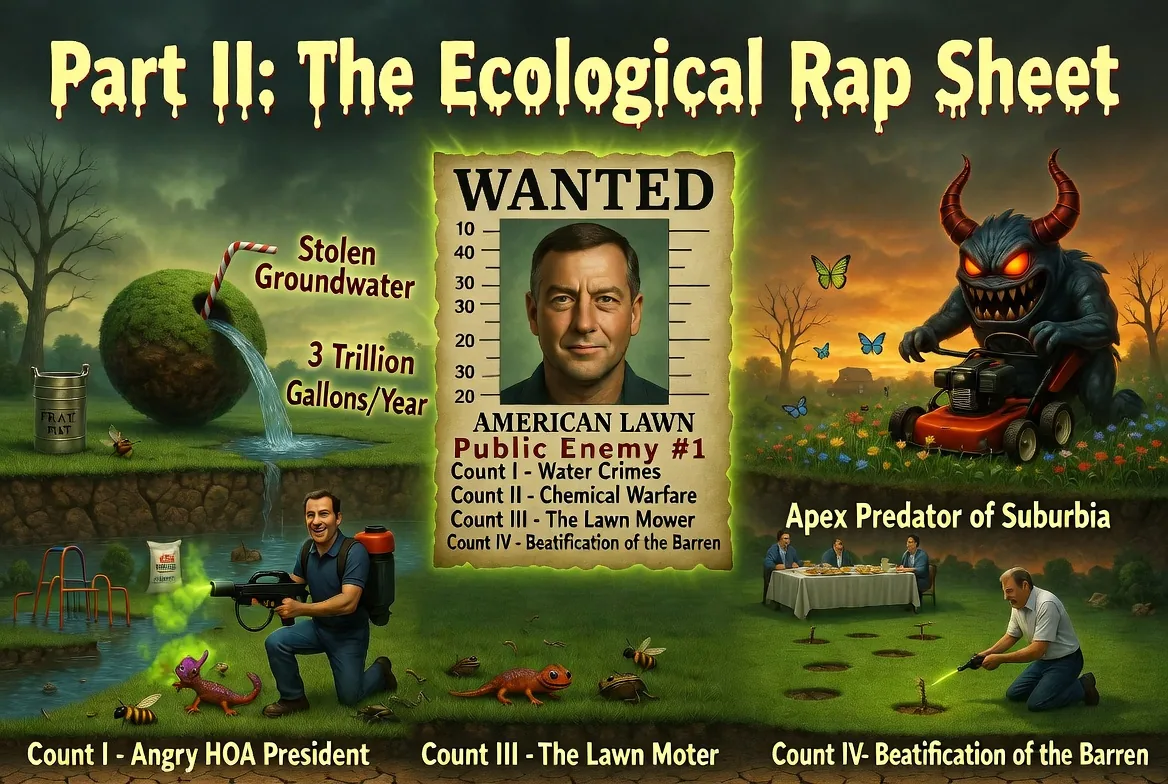
Part II: The Ecological Rap Sheet
Count I: Water Crimes
Lawns drink more than a frat house with a stolen keg — over 3 trillion gallons a year in the U.S. alone. They don’t sip; they guzzle, robbing aquifers like nature’s own stickup crew, all so Ted’s front yard can look like the world’s most boring golf course.
Count II: Chemical Warfare
The lawn gets its seasonal bump — a cocktail of pesticides, herbicides, and fungicides so potent it could pickle a salamander mid-wiggle. The runoff drifts into rivers and playgrounds alike, a toxic love letter co-signed by Ted’s HOA and every fertilizer dealer within county lines.
Count III: The Lawn Mower — Mankind’s Finest Blunt Instrument
This isn’t just a machine; it’s the apex predator of suburbia. Fueled by gasoline and spite, it converts perfectly good Saturday mornings into a haze of fumes, vaporized grass clippings, and the echoing reminder that your day will not be peaceful. In 45 minutes, it can scalp an entire “green desert” into military-grade uniformity — an act of precision vandalism against biodiversity.
Count IV: Beatification of the Barren
Every blade of turf is a devotion to emptiness — a living vacuum where bees starve, toads bake, and only the chemical companies feast. To Ted, it’s not just grass; it’s therapy. Maybe if his father had said “I’m proud of you” instead of “The mower’s gas tank isn’t full,” Ted wouldn’t be out here polishing the Holy Green Facade — a perfect carpet of nothingness, maintained at great expense to ensure no living thing accidentally thrives there.
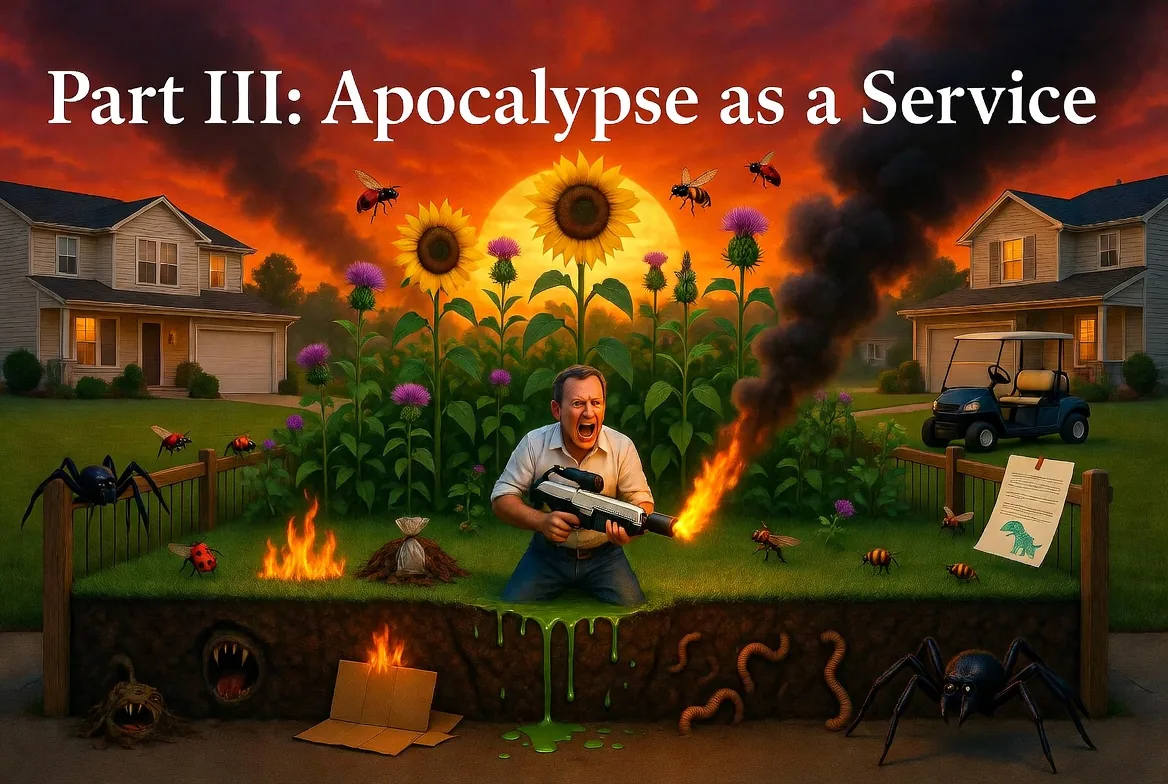
Part III: Apocalypse as a Service
Step 1: Eradicate it. No mercy, no funeral — just you, a flamethrower, and a questionable gleam in your eye. Lay down cardboard and compost like you’re staging a crime scene the worms will clean up.
Step 2: Seed it with something the neighborhood will never recover from — a jungle of 10-foot sunflowers, a carpet of edible weeds, or a thistle patch so defiant it looks like it’s plotting municipal overthrow. Bonus points if it attracts something with fangs.
**Step 3:**Invite chaos, not chemical warfare. Forget the sprays — release ladybugs, plant stinging nettles at the borders, and let spiders run border control like they own the place.
**Step 4:**When the HOA sends a strongly worded letter, frame it like a war medal and hang it in the kitchen beside that dinosaur drawing. Nothing says “I’m living right” like hate mail with an official seal.
The day after the Lawn dies, the soil exhales. Worms tunnel back in. Bees arrive like it’s a festival.
The air smells different — not like gasoline, but like actual life.
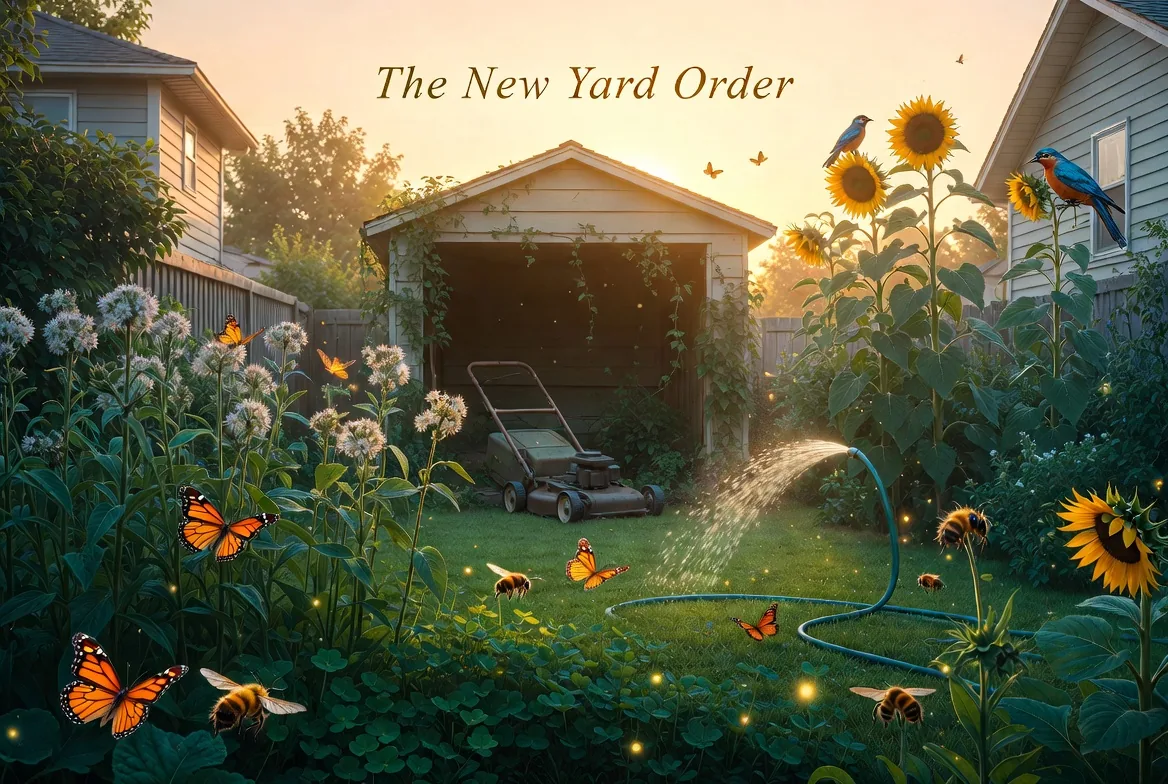
Part IV: The New Yard Order
In the New Yard Order, every plant has a job.
Clover runs the nitrogen economy.
Milkweed operates the monarch migration highway.
Sunflowers host bird brunch.
The mower is in the shed, gathering dust like a relic from a more boring age.
And the only spraying you do now? Water, on a hot day, over something worth keeping alive.